




221 results

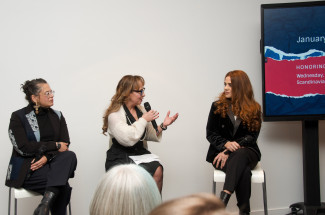
On January 28, 2026, ICTJ held its annual January for Justice Leaders benefit dinner in New York City, an event celebrating leaders advancing justice around the world. This edition also marked the beginning of ICTJ’s 25th anniversary year and served as an opportunity to look back on a quarter century spent standing alongside victims, civil society, and institutions in the pursuit of truth, accountability, and lasting peace after mass atrocities.

The outlet PassBlue recently interviewed ICTJ Executive Director Fernando Travesí-Sanz about the challenges and breakthroughs ICTJ has encountered while facilitating a victims-led path to transitional justice in post-Assad Syria. Travesí-Sanz compared the experience to the lessons learned from Colombia’s post-conflict transition, revealing the nuanced, fragile nature of both retroactive justice and long-term peacebuilding.

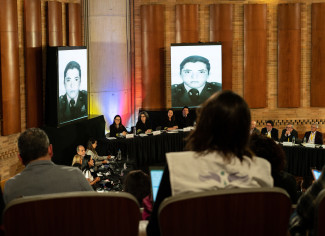
To commemorate the 20th anniversary of the Justice and Peace Law—which created Colombia's first transitional justice system—media outlet Verdad Abierta, the Friedrich Ebert Stiftung, and ICTJ partnered to produce an investigative four-part series in Spanish that critically assesses its legacy. Now translated into English, this second installment explores the unprecedented challenges the country faced as the process got underway.

To commemorate the 20th anniversary of the Justice and Peace Law—which created Colombia's first transitional justice system—media outlet Verdad Abierta, the Friedrich Ebert Stiftung, and ICTJ partnered to produce an investigative four-part series in Spanish that critically assesses its legacy. Now translated into English, this first installment provides an overview of the process.

To commemorate the 20th anniversary of the Justice and Peace Law—which created Colombia's first transitional justice system—media outlet Verdad Abierta, the Friedrich Ebert Stiftung, and ICTJ partnered to produce an investigative four-part series in Spanish that critically assesses its legacy. ICTJ has now translated the first two installments into English.

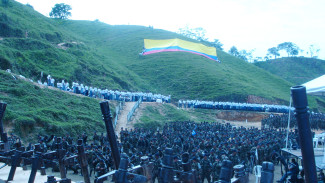
This year, Colombia commemorates the 20th anniversary of the Justice and Peace Law, which established the country’s first formal transitional justice mechanism. On this milestone anniversary, ICTJ reflects on the evolution that led to the groundbreaking law, the lessons that have been learned so far, and the challenges that lie ahead.

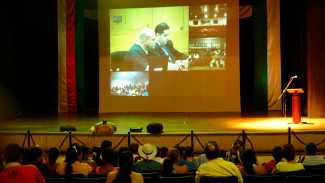
ICTJ, in collaboration with the Center for Media Integrity of the Americas, the Cyrus R. Vance Center for International Justice, and the New York City Bar Association, recently hosted a screening of the Colombian documentary Después del Frío ("After the Cold"). Coproduced by ICTJ and Colombian journalist María Jimena Duzán, with the support of the Embassies of Sweden and Norway in Colombia, the film paints an intimate portrait of a nation seeking healing and transformation, where the scars of the past give way to hope.

This year, Colombia commemorates the 20th anniversary of Law 975, which established the country’s first transitional justice process, called Justicia y Paz (or Justice and Peace). With this anniversary top on mind, and as the current government engages with eight of the remaining armed groups in pursuit of its “Total Peace” strategy, ICTJ recently teamed up with podcast producers Sillón Estudios to create a four-part series that delves into the peace process with the AUC and considers key lessons learned.

In this era of technological transformation, it is critically important to develop digital strategies for documenting human rights violations, analyzing data for accountability or reparations purposes, and safely advocating for human rights online. This is particularly true in contexts where victims, human rights actors, and members of the media live in fear. To this end, ICTJ has recently led trainings for human rights activists in conflict-affected countries on open-source investigation tools to help them do their work more effectively.

Human rights violations as well as any official response to them affect women’s lives in distinct, profound, and often unseen and unspoken ways. For a society grappling with mass atrocities, it is crucial to shed light on these diverse experiences, if they are ever to be acknowledged and repaired. Space must therefore be created for women victims to share their experiences. Libya is one such country. To help raise the voices of women victims and human rights defenders there, ICTJ has been collaborating with diverse women-led civil society organizations since 2019, bringing them together and helping them build their capacities.