32 results

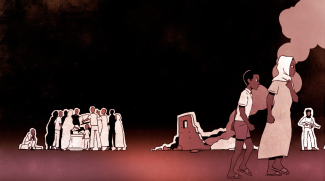
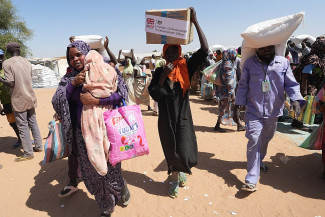
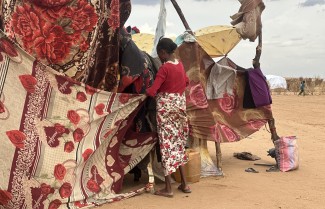
As the world marks the third anniversary of the brutal war in Sudan, it is a moment to reflect on a conflict that rarely receives the media attention it deserves and to consider the millions of Sudanese caught in cycles of violence.

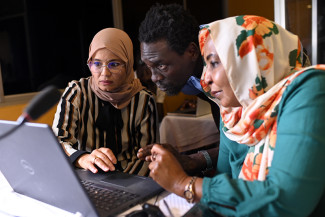
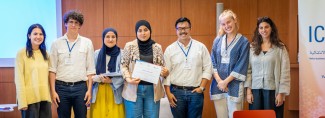
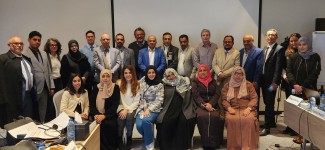
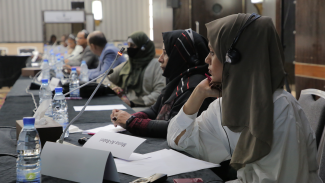
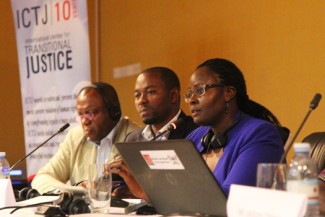
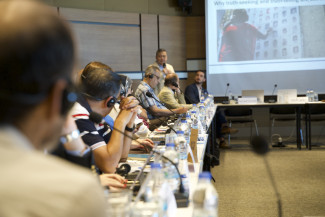
ICTJ recently convened human rights defenders, journalists, and lawyers from Libya, Sudan, Syria, Tunisia, and Yemen for a workshop on digital, open-source investigations. Held on November 3-8 in Kampala, Uganda, the course trained participants on open-source tools with a view to strengthening their work investigating, documenting, and monitoring human rights violations.

Throughout 2025, ICTJ’s experts offered thoughtful analysis on conflicts and major political developments in more than 10 countries as part of the World Report newsletter. Their insightful commentaries shed light on the obstacles that victims, civil society, and their partners must navigate as they pursue sustainable peace and justice. In this edition, we look back on the past year through the Expert’s Choice column.

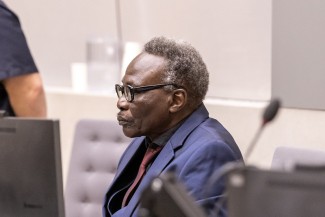
On October 6, the International Criminal Court (ICC) found former Janjaweed militia leader Ali Muhammad Ali Abd-Al-Rahman (also known as Ali Kushayb) guilty of 27 counts of crimes against humanity and war crimes committed in Darfur between August 2003 and March 2004. This landmark verdict counters cycles of impunity in Sudan and sends a powerful message that these crimes are not tolerated.

Despite the enormous challenges, Sudanese civil society and other stakeholders are prioritizing transitional justice, acknowledging the need to address past injustices to end the cycle of conflict in their country. ICTJ continues to support them as they envision and design victim-centered, gender-sensitive, and inclusive strategies. Leading these efforts is ICTJ's Ilaria Martorelli. In this interview, she discusses the prospects for lasting peace, accountability, and repair in Sudan.

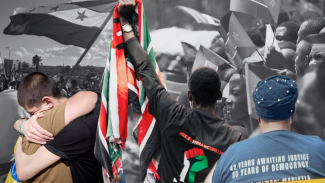
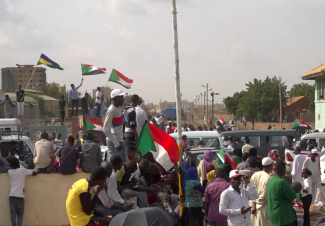
This April, Sudan marked a double anniversary: one of the 2019 revolution that toppled President Omar al Bashir’s decades-long repressive regime, the other of the 2023 outbreak of the ongoing civil war that has devastated the country. These contrasting occasions bring with them great hopes and deep pain. They also raise pressing questions: How long will Sudan have to suffer while the world’s attention seems turned the other way? How long will the voices of Sudanese who yearn for peace and justice continue to be sidelined?

Since 2014, conflict in Yemen has caused hundreds of thousands of deaths, displaced millions, destroyed the economy, and exacerbated systemic marginalization, creating one of the world’s worst humanitarian catastrophes. Yet currently, transitional justice and reconciliation take up little space in the Yemeni political arena. In this context, ICTJ has released a new report that explores pathways to a just and sustainable peace in Yemen.

This report explores pathways for transitional justice in Yemen, emphasizing victims’ experiences, political dynamics, and existing justice mechanisms. It examines national and local efforts, including mediation and reconciliation initiatives, and highlights the role of Yemeni civil s...

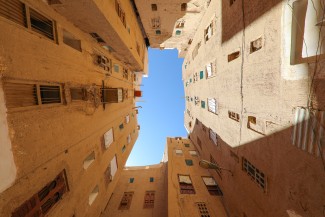
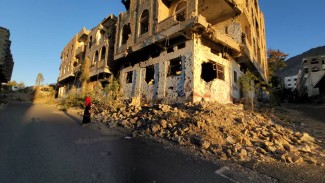
The sun shines into an urban courtyard of what it appears to be residential buildings.

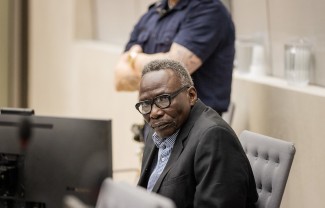
ICTJ accompanied more than 10 Sudanese victim stakeholders to the International Criminal Court (ICC) in The Hague to attend the closing statements in the case of The Prosecutor v. Ali Muhammad Ali Abd-Al-Rahman ("Ali Kushayb"). The statements took place on December 11 to 13. ICTJ supported the ICC in the selection of the stakeholders, who were chosen for their strong ties with affected communities.

In this era of technological transformation, it is critically important to develop digital strategies for documenting human rights violations, analyzing data for accountability or reparations purposes, and safely advocating for human rights online. This is particularly true in contexts where victims, human rights actors, and members of the media live in fear. To this end, ICTJ has recently led trainings for human rights activists in conflict-affected countries on open-source investigation tools to help them do their work more effectively.

Yemen's nine-year conflict has devastated the country and created one of the world’s worst humanitarian crises. The regional upheaval stemming from the ongoing war on Gaza has created more obstacles on the country's already complex path toward peace and shifted attention away from the set of UN-brokered commitments agreed upon by the parties to the conflict in December 2023, which include a nationwide ceasefire. Amid these challenges, it is more imperative than ever to support civil society and victims and bring attention to victims’ grievances and needs.

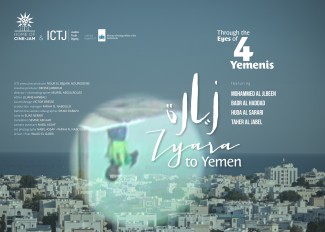
The Arabic word “Zyara” means “visit” in English. The Zyara documentary series takes an innovative, deeply personal approach to storytelling with a view to nurturing collective social and emotional healing. Through candid encounters, it paints poetic portraits of four Yemenis refugees living in Oman, including a human rights lawyer and activist, a restaurant worker, a martial arts champion, and a businessman. By telling their stories and celebrating the resilient spirit of the Yemeni people, the Zyara project seeks to raise awareness and preserve truth and memory.

The Arabic word “Zyara” means “visit” in English. The Zyara documentary series takes an innovative, deeply personal approach to storytelling with a view to nurturing collective social and emotional healing. Through candid encounters, it paints poetic portraits of four Yemenis refug...

The Arabic word “Zyara” means “visit” in English. The Zyara documentary series takes an innovative, deeply personal approach to storytelling with a view to nurturing collective social and emotional healing.

In 2016, the Yemeni National Commission to Investigate Alleged Violations to Human Rights began documenting violations committed since the 2011 uprising and during the subsequent brutal civil war, which continues today. To date, the commission has documented more than 23,000 human rights abuses and referred over 2,000 cases to Yemen’s Public Prosecutor for prosecution. However, no verdict has been issued in any of these cases. To help the commissioners and members of Yemen’s judiciary advance accountability, ICTJ organized a workshop for them on transitional justice mechanisms. However, to deliver a justice that meets all the reparative needs of victims, these efforts must be an integral part of a broader, multifaceted transitional justice process.

Even as the parties to the war in Yemen fail to extend the UN-brokered ceasefire, field monitors of the National Commission to Investigate Alleged Violations to Human Rights (NCIAVHR) continue to document and investigate human rights violations despite enormous challenges and serious risks to their...

Sparing almost no corner of the world from its wrath, the COVID-19 pandemic has now spread to every country. In an effort to slow the contagion, governments in most countries have been taking drastic measures requiring all residents other than essential workers to confine themselves in their homes, and shutting down vast sectors of their economies. The impact has been crushing. COVID-19 has profoundly affected every country where ICTJ currently works: Armenia, Colombia, Cote d’Ivoire, Ethiopia, Gambia, Kenya, Lebanon, Libya, Sudan, Syria, Tunisia, and Uganda. We recently caught up with ICTJ’s heads of country programs to learn more about the impact the pandemic is having on transitional justice and society more broadly.

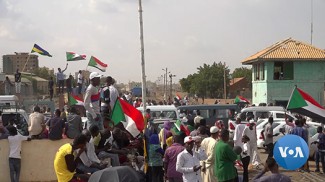
After decades of repressive rules, military coups, and conflicts in the country’s marginalized peripheries, the Sudanese people have come together and proven their resolve to break with the past and begin a new chapter of their nation’s history. Undeterred by a brutal crackdown, thousands of...

In Africa's Great Lakes region, countries face common challenges like bad governance, inequitable distribution of natural resources, and ethnic divisions. As nations like Burundi, Central African Republic and South Sudan work towards peacebuilding and accountability, they should learn from what has worked and what has not in neighboring countries, writes Sarah Kihika Kasande, ICTJ's Head of Office in Uganda.

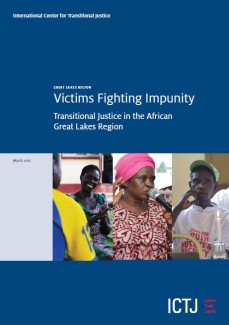
A new ICTJ report argues that in Africa's interconnected Great Lakes region, each country’s attempt to provide justice for past violations offers lessons for similar processes in others. We gathered civil society activists from across the region to discuss which strategies have worked for them, which have not, and opened up about the greatest challenges they face in securing justice.

In many countries of the African Great Lakes region, state-led approaches to transitional justice have been created by wide-ranging agreements or policies that have been later forgotten or only partially implemented. Even when implemented, they are often subject to years of delay and/...

The Africa Union's resolution to collectively support a strategy to withdraw from the ICC looks more like a machination of those who have instrumentalized an argument against the court to protect themselves from the long arm of justice, write ICTJ's top experts on Africa.

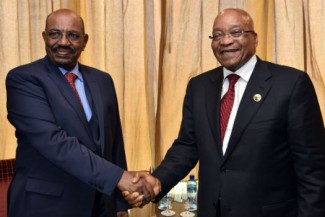
South African authorities apparently believe that once the country has officially withdrawn from the ICC, it will be free to invite the likes of Sudanese President al-Bashir to the country. That's not so, writes ICTJ's Howard Varney, who explains why the country's obligations would continue beyond its departure from the court.

The struggle against impunity remains as important –and precarious –as ever as we celebrate International Justice Day on July 17. ICTJ marks the occasion with a look at complementarity, a concept critical to understanding the role that the ICC and national courts play in this struggle.

Evelyn Amony tells the harrowing story of her years in captivity with the LRA, and experience of grinding poverty and stigma after returning home with two children, in her new memoir, I Am Evelyn Amony: Reclaiming my Life from the Lord's Resistance Army. The autobiography, which tells the difficult truths of women and girls in wartime as only a firsthand witness can, will be launched today in New York, at the Japan Society.

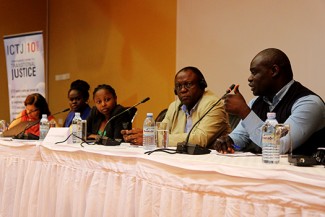
Today, ICTJ opened a two-day conference in Kampala, Uganda, gathering activists and officials from the African Great Lakes Region to discuss efforts at redress and accountability for serious human rights violations committed in their countries.

Civil society leaders, members of victims' groups and state officials throughout the Great Lakes region will convene in Kampala, Uganda next week at a conference hosted by ICTJ. Attendees will share their experiences working for redress in their communities and discuss what strategies have proven effective at the local level.

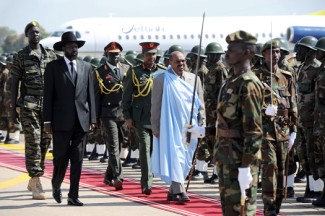
Human Rights Network-Uganda (HURINET-U), The Uganda Coalition on the International Criminal Court (UCICC), The International Center for Transitional Justice, Avocats San Frontiers and Atrocities Watch are dismayed to learn that Government of Uganda has extended an invitation to President Omar al...

In a major effort to promote accountability for serious crimes in Africa, ICTJ joined hundreds of human rights groups and transitional justice partners to ask the African Union to prioritize justice. Addressed to the new African Union (AU) Chairperson Dr. Nkosazana Dlamini-Zuma, the letter warns that strained relationships between the AU and the International Criminal Court (ICC) may put justice at risk.

This paper focuses on the issue of reparations in Darfur. It particularly emphasizes victims' right to reparation for the harm done to them, and aims to ensure that this right is recognized and upheld in any peace process. Drawing on experiences from other regions, it reviews and addr...

Few conflicts have garnered as much attention as the recent one in Darfur. Widespread atrocities reported by several organizations including an International Commission of Investigation compelled the United Nations (UN) Security Council to refer the situation in the western region of ...

Transitions focuses on Sudan's referendum on whether the south will be independent. Suliman Baldo, ICTJ Africa Program Director, talks about the referendum and prospects for peace in Sudan.