


148 results

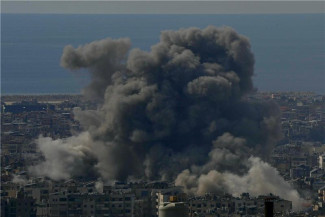
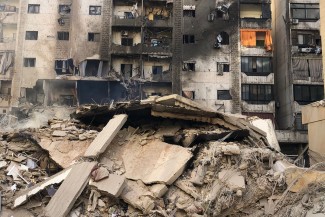
Recent Israeli strikes in Beirut and other populated areas in Lebanon, among the conflict's most intense so far, have destroyed critical infrastructure and devastated civilian communities. ICTJ stands unequivocally with the Lebanese people and all victims across the region and calls for an immediate end to all attacks on and threats to civilian communities and infrastructure.

ICTJ is watching with grave concern the unfolding war launched by the United States and Israel against Iran and its devastating ripple effects across the wider region. Over a month into the conflict, the human cost is staggering. We at ICTJ reaffirm the international principles that govern our shared world and stand unequivocally with all victims across the region.

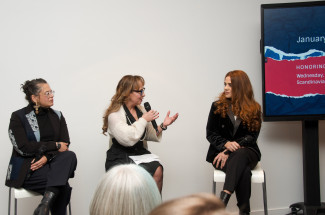
On January 28, 2026, ICTJ held its annual January for Justice Leaders benefit dinner in New York City, an event celebrating leaders advancing justice around the world. This edition also marked the beginning of ICTJ’s 25th anniversary year and served as an opportunity to look back on a quarter century spent standing alongside victims, civil society, and institutions in the pursuit of truth, accountability, and lasting peace after mass atrocities.

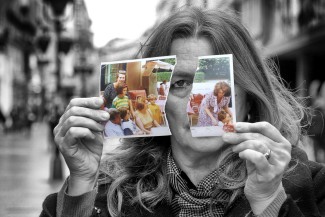
In an article first published in El Periodico, journalist Andrea López-Tomas paints an intimate portrait of the Lebanese women who against the odds continue to search for their missing loved ones half a century after the civil war began.

The ongoing war in the Middle East is not an isolated event; it represents a 75-year cycle of violence marked by historical grievances, geopolitical struggles, and humanitarian crises. In the latest episode of this tragic story, Lebanon has become the newest battlefield. So far, the conflict has caused widespread destruction, killed or injured thousands, and displaced over a million in Lebanon. The country now faces many daunting questions about reconstruction, reparations for victims, and the type of society that will emerge in the war’s aftermath.

ICTJ is pleased to announce the winners of its “Overseas” writing contest. In it, young people originally from or currently residing in Lebanon, Libya, or Tunisia who have left their home countries for political or socioeconomic reasons were asked to share their personal experiences of migration in the form of a short, written testimony.

ICTJ is pleased to announce the “Overseas: Writing Contest,” an open call for young migrants originally from or currently residing in Lebanon, Libya, or Tunisia to share their personal experiences of migration in the form of a short, written testimony.

More than 20 years after the end of the Yugoslav Wars of the 1990s, Kosovo is still contending with unresolved ethnic tensions. Formerly an autonomous region of Serbia within the former Yugoslavia, Kosovo declared independence in 2008. Ethnic tensions were a root cause of the violent conflicts, during which an estimated 140,000 died and numerous atrocities were committed. ICTJ recently sat down with ICTJ's Anna Myriam Roccatello and Kelli Muddell to learn more about ICTJ's work and the present challenges to truth and justice in the country.

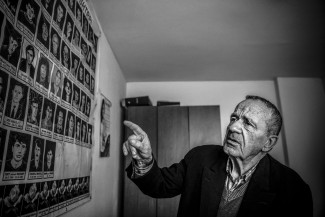
The photography exhibition “All Our Tears” weaves together the stories of victims from the wars in the Western Balkan region in the 1990s. It consists of photographs taken by four photographers in various locations in Kosovo, North Macedonia, and Serbia, and was part of a three-year project funded by the European Union that brought together civil society organizations and victims’ groups in Kosovo, North Macedonia, and Serbia, along with the international organizations ICTJ and PAX to develop meaningful, victim-led peacebuilding and reconciliation initiatives in the region.

The photography exhibition “All Our Tears” weaves together the stories of victims from the wars in the Western Balkan region in the 1990s. It consists of 34 original photographs, taken by four photographers in various locations in Kosovo, North Macedonia, and Serbia. The photographs fea...

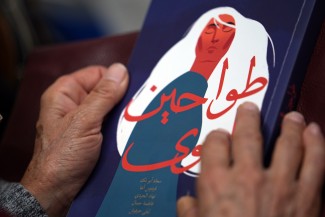
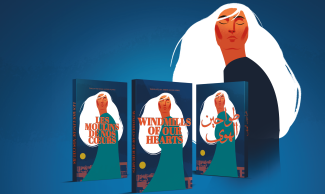
The International Center for Transitional Justice (ICTJ) and the Committee of the Families of the Kidnapped and Disappeared in Lebanon (CFKDL) will release Windmills of Our Hearts, a new book of short stories by 15 women relatives of missing and forcibly disappeared persons in Lebanon. On June 1, ICTJ and CFKDL will host a public launch and book signing event at Dar el Wardieh in Hamra, Beirut.

In Lebanon, in the absence of an overarching curriculum, young people are growing up with scant knowledge of the country’s history. Young people want to understand the war so that they can address its legacy of violence and divisions and face the continuing violence and ever-present danger of...

In Lebanon, in the absence of an overarching curriculum, young people are growing up with scant knowledge of the country’s civil war. Over the past year, ICTJ has sought to fill this knowledge gap by holding oral history workshops with university students and connecting them with the Co...

For many years now, the International Center for Transitional Justice and other organizations have supported young activists and artists as they harness the power of art, culture, and new media to advance truth, justice, reform, and redress, not only where they live, but across borders and in collaboration with others. This innovative and inspiring work offers lessons about how to increase civic engagement and help societies know the truth about their country’s past and actively shape the national narrative.

In January 2022, ICTJ launched the Wide Awake Art Contest, an open call event inviting Lebanese and Tunisian artists as well as artists living in Lebanon or Tunisia to explore the theme “the Sound of Dissent.” The contest spotlights the creative works by those who are document...

Tunis, March 22, 2022­—The International Center for Transitional Justice (ICTJ) will hold a series of cultural activities from March 21 through March 26, 2022, as part of its Wide Awake Art Contest. The contest, launched in January, invited Lebanese and Tunisian artists, as well as expat artists...

This study explores specialized units established in 23 countries to investigate and prosecute serious international crimes. Notwithstanding the challenges faced by these units, the study concludes that countries with a specialized institutional approach are considerably more successf...

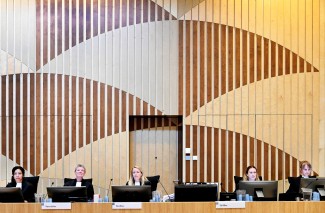
several judges dressed in black gowns sit on a judicial bench.

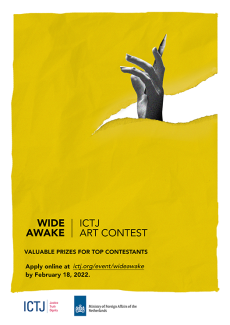
New York, January 18, 2022— The International Center for Transitional Justice (ICTJ) is pleased to announce the “Wide Awake Art Contest,” an open call to Lebanese and Tunisian artists as well as artists living in Lebanon or Tunisia to explore the theme “the Sound of Dissent.” The contest will showcase works by those who are documenting and memorializing their communities’ stories in times of instability, resistance, and change.

This study explores a transitional justice approach to the dilemma of foreign fighters in violent conflict. Such an approach can help center human rights in comprehensive responses to foreign fighters, and shift the current focus from security and punishment to justice and long-term p...

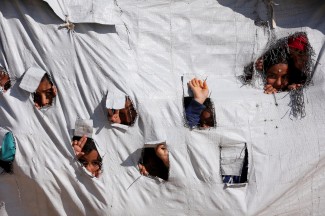
Image of Children looking through holes in a tent at al-Hol displacement camp in Hasaka governorate, Syria, on April 2, 2019.

New York, December 10, 2021—In contexts such as Afghanistan, Bosnia, Chechnya, Iraq, Somalia, and Syria, hundreds, sometimes thousands, of individuals have crossed national borders to engage in violent conflicts in which serious human rights violations and mass atrocities have been committed...

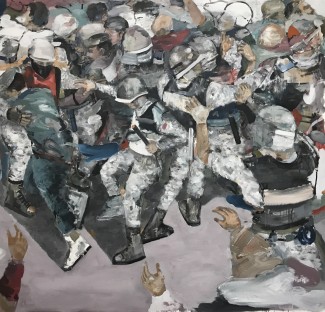
The global COVID-19 pandemic forced many countries to impose emergency measures, such as curfews and community lockdowns, to stem the spread of the virus. To enforce these measures, some societies have given regular police forces increased power to enforce the measures, while others h...

As part of its ongoing support of the Committee of the Families of the Kidnapped and Disappeared in Lebanon, ICTJ organized a three-day virtual workshop on transitional justice for university students on July 12-14, 2021. The students all served as volunteers on a project to establish an archive of the committee’s work and activism over the past four decades and participated in a previous workshop in February 2020 that introduced them to transitional justice concepts.

On February 4, 2021, the prominent activist, intellectual, writer, and filmmaker Lokman Slim joined the long list of victims of violence and impunity in Lebanon. The courageous human rights and political activist was found shot to death in his car in southern Lebanon.

Lebanon has long been afflicted by a combination of political deadlock and a lack of accountability that has resulted in ongoing human rights violations and overall systemic rot. Comprehensive reforms, along with an inclusive truth-seeking process, broad public dialogue, and other way...