


1519 results

Where does transitional justice stand in Sri Lanka? Kelli Muddell, Director of ICTJ's Gender Justice Program, explores the country's contested historical narratives.

Kenyan media house Africa Uncensored has teamed up with the International Center for Transitional Justice (ICTJ) on a documentary that explores the Bulla Karatasi massacre that took place in the northern region of Garissa, Kenya, and its impact on communities in the North. The documentary will advance ICTJ’s efforts to partner with civil society on community-state dialogue initiatives, engage stakeholders around political and constitutional reforms stemming from the TJRC’s recommendations, and achieve redress for the legacy of state violence in Garissa and other communities in Northern Kenya.

A new short documentary film “Remember Me” tells a powerful story of two young women whose fathers were disappeared during the conflict in Bosnia and Herzegovina.

The Documentation Affinity Group (DAG) was established in 2005 by ICTJ and five partner organizations as a peer-to-peer network with a primary focus on human rights documentation. Documenting Truth collects the best practices derived from the work of the DAG organizations in Cambodia,...

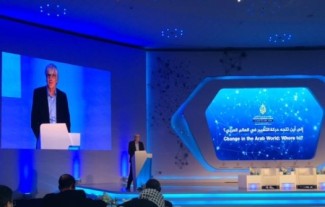
Three years after the so-called the “Arab Spring,” the post-revolution era has so far been marked by a mix of hope and hardships. At the 8th Al Jazeera Forum, ICTJ President David Tolbert explains what went wrong.

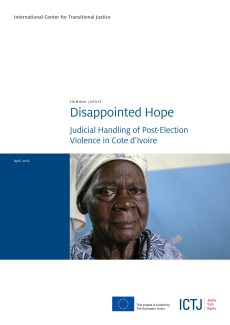
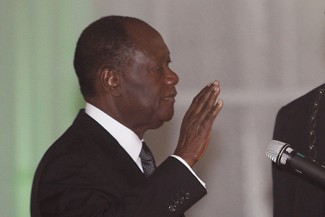
In this op-ed, ICTJ President David Tolbert argues that President Alassane Ouattara should use his second term as president to address widespread atrocities committed in Cote d'Ivoire's recent past.

It may seem trivial for me to write about why those who continue to mark July 17 as "International Justice Day" should finally stop calling it that. Many human rights groups (including ICTJ), United Nations agencies, and governments have been publicly using that phrase since 2010. It is for victims of massive and systematic human rights violations, including abuses that amount to international crimes under the Rome Statute, that it is important to end the misconception that the phrase encourages.

This publication is intended to facilitate the process of drafting a mandate for a truth commission charged with the nonjudicial investigation of serious human rights violations. It covers the different aspects of a legal mandate that are necessary to enable an effective truth-seeking...

A new amnesty law passed by the government in the Democratic Republic of the Congo (DRC) will grant amnesty to hundreds of members of armed groups engaged in hostilities, including members of the infamous M23 rebels, but stops short of pardoning serious crimes.

Providing justice to victims of human rights abuses in fragile contexts such as the Central African Republic (CAR) is challenging for reasons related not only to the state’s stability, capacity, and political will, but also socioeconomic inequality in the country. This research report...

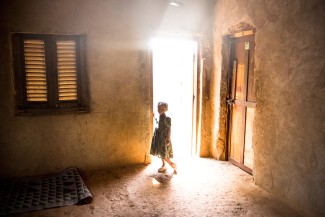
A young girl stands in the doorway to her house

This paper summarizes the basic facts about the Dujail trial, the first trial before the Iraqi High Tribunal (IHT) against Saddam Hussein and seven others. It also summarizes facts about the IHT in general. It considers both what the Iraqis wanted out of the trial, what such prosecuti...

In the Netherlands, a court sentenced an arms dealer to 19 years in prison for his role in war crimes in Liberia. What does his case tell us about pursuing justice for economic crimes in Liberia and beyond?

In less than two months since the inauguration of Rodrigo Duterte as president of the Philippines some 1,900 people have been killed at the hands of the police and death squads for suspected drug dealing or drug addiction. These unlawful murders echo the pattern of widespread and systematic extrajudicial killings that the country suffered under dictator Ferdinand Marcos.

As attested by the arrest on January 3, 2013 in the United Kingdom of Kumar Lama, a Nepali Army Colonel suspected of torture, the government of Nepal’s failure to pursue truth and accountability for conflict-era violations can have serious consequences. Rather than resisting UK efforts to implement its obligations under international law, the Nepali government should develop a full transitional justice programme and redouble its efforts to provide truth, justice and reparations inside the country.

This journal article examines challenges to the legitimacy of the Special Tribunal for Lebanon (STL). These challenges include selective impunity, the highly selective nature of the jurisdiction of the STL, and the fears that the STL itself will act as an instrument for foreign powers...

This report, part of a joint research project by ICTJ and UNICEF on the intersections of education, transitional justice, and peacebuilding, explores how a transitional justice framework can help to identify educational deficits relating to the logic of past conflict and/or repression...

The first piece in of our "Transitional Justice and Education" series examines the role of school systems in Bosnia and Northern Ireland.

Much of ICTJ’s work—and in fact much of the field of transitional justice—can be understood as the pursuit of effective remedies for victims of severe human rights violations. A remedy involves two elements: a victim’s access to the appropriate authorities to have his claim fairly hea...

ICTJ joins other international and national human rights groups from across the global calling for Egypt to protect the independence of non-governmental organizations.

NEW YORK, Feb. 14, 2011—As Egyptians redesign their constitution and political system, they should also consider meaningful ways to address legacies of human rights violations, the International Center for Transitional Justice (ICTJ) said today. "Egyptian officials should seize the opportunity to...

NEW YORK, Feb. 3, 2011—The Egyptian government should immediately order the release of human rights activists being held by security forces in Cairo, said the International Center for Transitional Justice (ICTJ) today following reports of activists from Hisham Mubarak Legal Centre, the Egyptian...

In recognition of International Women’s Day, our experts on Gender Justice have identified eight of the many ways in which women’s lives are affected by disappearances.

Do the concepts and strategies of transitional justice have a role to play in the United States? Our 2017 Emilio Mignone Lecture asked that question, with Darren Walker, President of the Ford Foundation, and Sherrilyn Ifill, President and Director-Counsel of the NAACP Legal Defense Fund, joining ICTJ's David Tolbert in conversation. Watch the full discussion here.

The right to the truth carries special resonance in Kenya, and so on March 24th Kenyan state agencies, survivors, civil society organizations, and international partners will join together in Nairobi to observe the International Day for the Right to the Truth. It provides an opportunity not just for remembrance, but also for greater dialogue between the government and victims about the implementation of reparations programs and of the findings presented in the Truth, Justice and Reconciliation Commission's final report.

In its primary findings, Kenya's Truth, Justice and Reconciliation Commission noted that women and girls have been subject to systematic, state-sanctioned discrimination in all spheres of their lives, and that the state has failed to take measures to end the practices that r...