269 results

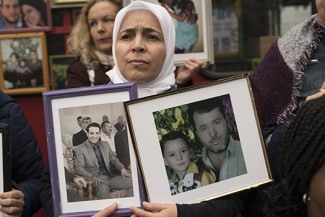
Expectations for advancing much-needed justice and dismantling state and non-state criminal networks that persistently violate human rights have been dashed over the past three years in Mexico. Violence and impunity have increased. President Andrés Manuel López Obrador's campaign promises have not materialized in a serious effort to address the lack of security in the country or the justice system’s inefficiency. However, several efforts have persisted, characterized by cooperation among state institutions, civil society, and victims’ groups that not only give hope, but confirm the way forward.

Alonso Ojeda Awad and Medardo Correa joined Colombia’s notorious leftist guerrilla group the National Liberation Army (ELN) in their youth. After fighting with the group for several years, they and a handful of other ELN members demobilized voluntarily in the 1980’s. But it was not until 2019 that they were able to sit down with former members of paramilitary groups to discuss acknowledgment and responsibility for past crimes, reparation, and the importance of non-recurrence.

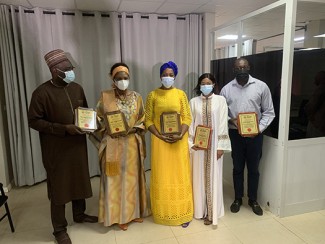
On July 13, 2021, the Gambia’s Truth, Reconciliation and Reparations Commission (TRRC) presented an award to ICTJ for its sustained support of the commission and its commitment to the country’s transitional justice process. The award comes as the TRRC concludes its work and prepares to submit its final report to the country’s president by September 30, 2021.

On June 25, President of the Philippines Rodrigo Duterte publicly proposed arming civilian supporters in his war on drugs. His statement comes barely a week after the International Criminal Court’s (ICC) outgoing prosecutor, Fatou Bensouda, announced her request to open an investigation into crimes against humanity related the Philippines’ war on drugs. This step has been long-awaited by victims of the drug war. Nonetheless, the ICC case should be part of a larger, more strategic fight for justice in which the needs, safety, and future of the predominantly poor families victimized by the drug war are central and just as important as naming, shaming, and prosecuting the perpetrators and abettors of these crimes.

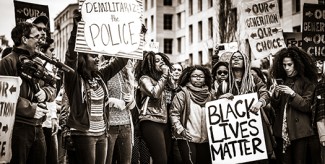
“No peace without justice” is a chant that filled the streets of the United States last year following the murder George Floyd by police in May 2020. This same chant has animated protest movements and social and political upheaval in many countries around the world. We at ICTJ know from our experience that these calls for justice are for something far more encompassing than criminal accountability alone.

This year marks ICTJ’s 20th anniversary. For the past two decades, the organization has engaged in more than 50 countries, providing technical assistance and other critical support to victims, civil society, governments, and other stakeholders. Since its beginnings, ICTJ has served as a meeting point for transitional justice experts and practitioners and a hub of knowledge, research, and analysis. As a think tank that does, it has been at the forefront of the field’s evolution.

With a special court that has yet to open a trial and a truth commission that is not up and running, international attention on victims in the Central African Republic is waning. Since 2015, the unfulfilled promises of justice made to these victims have failed to address their daily realities and needs for immediate moral, physical, and material reparations, writes Rim El Gantri, one of the authors of a recent study by ICTJ and Cordaid.

On March 31, 2021, the Appeals Chamber of the International Criminal Court upheld the Trial Chamber I’s acquittal of former Ivorian President Laurent Gbagbo and Charles Blé Goudé of all charges relating to crimes against humanity they allegedly committed during Côte d’Ivoire’s 2010-2011 post-election crisis. While the acquittal may be frustrating to many pursuing justice and accountability in Côte d’Ivoire, a silver lining is that it could mean tangible benefits for victims.

2020 was a year of unforeseen hardships throughout the world. We may wish to write off last year as a loss and move forward. However, looking back on it as we do in this 2020 Year in Review, in which we highlight our most read content, we can find and take heart in important victories and apply lessons learned in 2021 and beyond.

On February 4, 2021, the International Criminal Court issued its judgment in the case of the Prosecutor v Dominic Ongwen. The ICC found Ongwen guilty of 61 counts of crimes against humanity and war crimes committed in Northern Uganda between July 1, 2002, and December 31, 2005. The verdict recognizes the enduring impact of the crimes on the victims, their families, and Ugandan society more generally.