36 results

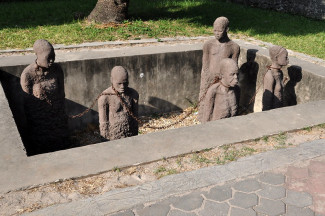
On March 25, 2026, the UN General Assembly adopted a resolution recognizing the enslavement of Africans as the gravest crime against humanity. The resolution is an integral part, if not the culmination, of a wider push by African states for reparations for historical injustices, including the transatlantic slave trade, colonialism, apartheid, and genocide.

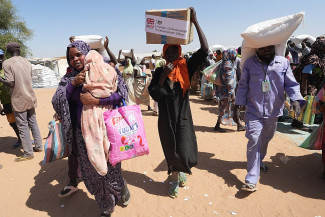
As the world marks the third anniversary of the brutal war in Sudan, it is a moment to reflect on a conflict that rarely receives the media attention it deserves and to consider the millions of Sudanese caught in cycles of violence.

Throughout 2025, ICTJ’s experts offered thoughtful analysis on conflicts and major political developments in more than 10 countries as part of the World Report newsletter. Their insightful commentaries shed light on the obstacles that victims, civil society, and their partners must navigate as they pursue sustainable peace and justice. In this edition, we look back on the past year through the Expert’s Choice column.

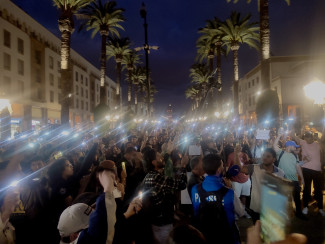
The death of eight women in childbirth at a hospital in Agadir this past August sent shockwaves through Morocco. The news crystallized national anger over deteriorating public services as well as persistent high unemployment and corruption. Years of frustration erupted into the streets as thousands of mostly young Moroccans gathered in cities and towns across the nation to protest and to demand accountability and institutional reform.

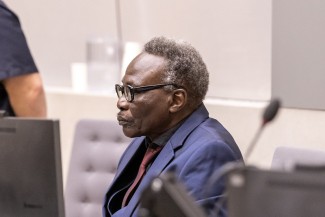
On October 6, the International Criminal Court (ICC) found former Janjaweed militia leader Ali Muhammad Ali Abd-Al-Rahman (also known as Ali Kushayb) guilty of 27 counts of crimes against humanity and war crimes committed in Darfur between August 2003 and March 2004. This landmark verdict counters cycles of impunity in Sudan and sends a powerful message that these crimes are not tolerated.

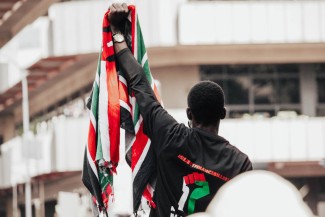
The police response to the peaceful anti-government protests in Kenya over the past year has been deadly and brutal. Their actions have rocked the country and reaffirmed the 2013 findings of the Kenyan Truth, Justice and Reconciliation Commission (KTJRC) that state security agencies, particularly the police, have historically used excessive and disproportionate force and “been the main perpetrators of bodily integrity violations of human rights in Kenya including massacres, enforced disappearances, torture and ill-treatment, and sexual violence.”

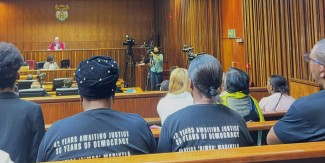
On April 14, 2025, the Johannesburg High Court handed down a landmark judgment. From his bench in courtroom 4D, Judge Dario Dosio dismissed the defense team’s objections to the inclusion of murder and apartheid as crimes against humanity charges in the indictment against two individuals accused of a deadly 1982 attack on anti-apartheid student activists. In so doing, the court cleared the way for crimes against humanity charges to be pursued in a South African domestic court for the first time. It also opened the door to the first ever prosecution of apartheid as a crime against humanity anywhere in the world.

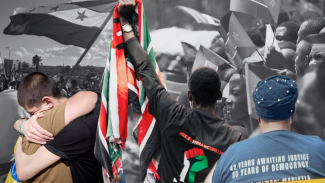
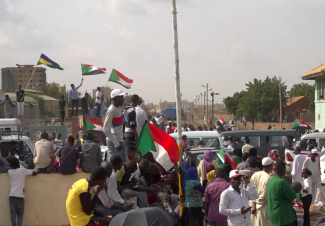
This April, Sudan marked a double anniversary: one of the 2019 revolution that toppled President Omar al Bashir’s decades-long repressive regime, the other of the 2023 outbreak of the ongoing civil war that has devastated the country. These contrasting occasions bring with them great hopes and deep pain. They also raise pressing questions: How long will Sudan have to suffer while the world’s attention seems turned the other way? How long will the voices of Sudanese who yearn for peace and justice continue to be sidelined?

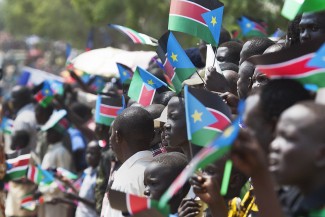
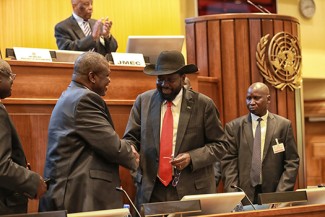
South Sudan’s transition to democratic governance through a highly anticipated, first-ever post-independence general election has to wait once again for another two years. Despite this latest extension, the country has achieved notable milestones in its transitional justice process.

In February 2024, the International Criminal Court (ICC) delivered its long-awaited reparations order in the case of The Prosecutor vs. Dominic Ongwen. Nearly two decades after the ICC intervened in Northern Uganda, this milestone decision both acknowledges the suffering of survivors and underscores the complexities and limitations of international justice. For victims who have waited for justice for over two decades, the order has been bittersweet.

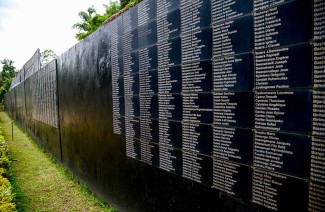
Thirty years after the 1994 genocide against the Tutsi in Rwanda, painful memories of those gruesome 100 days, during which almost one million Rwandan citizens lost their lives, still haunt the people of Rwanda, the rest of Africa, and the world. It is a solemn occasion to remember and honor the victims and survivors of the genocide and to acknowledge the tremendous strength and resilience they have shown in the wake of unspeakable tragedy. However, it is also a time for candid introspection on the African continent, and around the world, about the policies and mechanisms in place to prevent such atrocities.

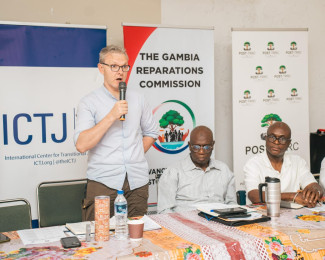
On February 29, 2024, The Gambia-Economic Community of West African States Joint Technical Committee held its inaugural meeting on the establishment of a hybrid court to hold to account those responsible for gross human rights violations committed in the country between July 1994 and January 2017 during the dictatorship of former President Yahya Jammeh. Such an internationalized court presents an opportunity to deliver criminal accountability to the victims and Gambian society as whole. It is also just the latest step in The Gambia’s transitional justice journey.

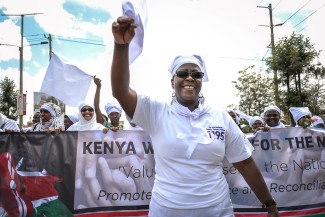
Thousands took to the streets across Kenya on January 27 following the gruesome slaying of more than a dozen women to denounce violence against women and demand action to end it. Protesters later gathered in Nairobi on February 14 for a Valentine’s Day vigil for the more than 30 women murdered in the country so far this year and to pressure the government to declare femicide and violence against women a national emergency and to establish a commission to address these crimes and thereby break the cycle of impunity. These efforts are laudable, if not inspiring. However, physical and sexual violence against women and femicide—at times perpetrated by law enforcement officers who are meant to protect them, as enshrined in Kenya’s 2010 Constitution—has persisted in Kenya for decades.

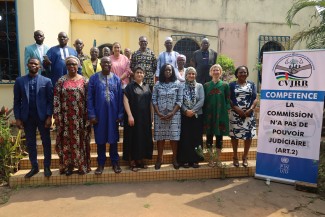
In 2021, the Central African Republic created the Truth, Justice, Reparation and Reconciliation Commission (CVJRR) to establish the truth, pursue justice, and restore victims’ dignity, with a view to ultimately achieving national reconciliation. In this fragile country, battered by successive episodes of violence, justice, in its broadest sense, has always been and remains a lifelong demand of victims. After a lengthy operationalization phase, the CVJRR is now finally getting ready to start registering and hearing victims’ testimonies. The first step in this process is statement taking, which requires taking several key factors into account to be successful.

Throughout 2023, ICTJ’s experts have offered their unique perspective on breaking news around the globe as part of the World Report. Their insightful commentaries have brought into focus the impact these events have on victims of human right violations as well as larger struggles for peace and justice. In this edition, we look back on the past year through the Expert’s Choice column.

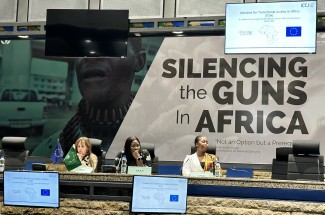
On October 25, the African Union (AU) and European Union officially launched their joint Initiative for Transitional Justice in Africa (ITJA) in Addis Ababa. The project will take place over a three-year period and will promote national transitional justice processes in Africa, in line with the AU Transitional Justice Policy and its roadmap. The ITJA has several unique features that, if embraced and advanced by all actors, have the potential to trailblaze a new and inspiring path to peace, justice, and sustainable development on the African continent.

Eight years ago, the United Nations General Assembly declared June 19 as the International Day for the Elimination of Sexual Violence in Conflict in an effort to raise awareness about this endemic tactic of war; honor the innumerable victims and survivors across the world, as well as those working to end these violations; and ultimately eradicate this dehumanizing practice. History has shown that whenever there is a political or security crisis juxtaposed with a militarized response, conflict-related sexual violence is deployed as a tactic to subdue, dehumanize, and terrorize civilians and opponents.

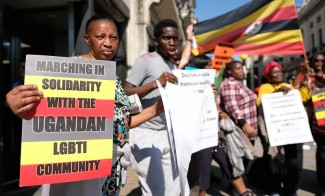
On March 21, the Ugandan Parliament passed the Anti-Homosexuality Bill, adopting the harshest anti-LGBTQ+ law in the world. Under it, homosexuality is punishable by life imprisonment, while "aggravated homosexuality" is punishable by death. The bill not only threatens the rights of LGBTQ+ persons, it undermines and erodes Uganda’s commitment to human rights.

Throughout 2022, ICTJ’s experts weighed in on breaking news in more than 10 countries, offering incisive analyses of the political dynamics behind the coverage and the implications for justice, peace, and the rights of victims. In this December edition of the World Report, we look back at the year that was through our Expert’s Choice commentaries, bringing you all of our team’s valuable insights together in one place.

Nearly two years after the conflict erupted in Ethiopia’s Tigray Region in the north, the Ethiopian federal government and the Tigray People’s Liberation Front signed an African Union-brokered cessation of hostilities agreement on November 2, followed by an implementation deal 10 days later. The breakthrough agreement offers a glimmer of hope after a brutal war. It charts a path toward peace and lays the foundations for addressing the legacy of the serious human rights violations and preventing their recurrence by providing for the implementation of a transitional justice policy centered on accountability, truth seeking, redress for victims, and reconciliation and healing.

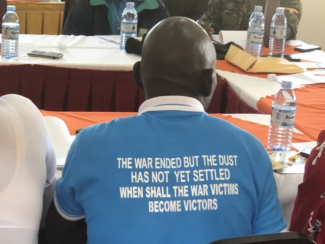
The recent move by the signatories to the Revitalized Agreement on the Resolution of Conflict in South Sudan (R-ARCSS) to extend the peace agreement’s life for another 24 months has not come as a surprise. While there have been some positive, though sporadic steps toward fulfilling the R-ARCSS, its...

Reparations for victims of sexual and gender-based violations (SGBV) raise a series of complicated questions and implementation challenges around how to acknowledge this category of victims and deliver reparations without exposing victims to stigma and rejection. Victims must weigh the risk of...

After seven years of waiting for the UN-backed Special Criminal Court (SCC) in the Central African Republic to begin operations, victims of the country’s civil war had hoped to finally see the first tangible step toward justice on April 25 when the first trial opened in the capital Bangui. The trial was initially set to begin on April 19, 2022, but was abruptly postponed when the defense attorneys failed to show up in an apparent boycott over their wages. When the defense lawyers returned to court on April 25, they immediately requested an adjournment, which was granted, and the trial was postponed again until May 16. It is very likely that this incessant postponement will further deflate already diminished confidence among victims in the SCC’s ability to deliver justice.

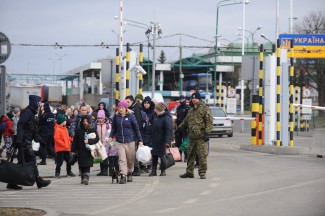
In the latest round of negotiations between Ukraine and Russia, the Turkish president called on both delegations to act responsibly and agree to a ceasefire. He reminded them of their historical mission to achieve a "just peace." While we may not know how and when this conflict will end, we already know some of what Ukrainian society will be grappling with in the near future. Significant portions of country’s civilian infrastructure have been destroyed. More than 4 million Ukrainians are now refugees; another 10 million are internally displaced; and a rising but still undetermined number have been killed, are missing, or are wounded. The real question is what does a just peace mean for Ukrainians.

On November 25, 2021, The Gambia’s Truth, Reconciliation and Reparations Commission (TRRC) presented its 17-volume final report and recommendations to President Adama Barrow, after multiple delays. The final report includes a record of serious human rights violations committed under Jammeh’s repressive regime and recommendations for pursuing justice. Despite the challenges, steps have already been taken that offer hope that the TRRC’s recommendations will take effect.

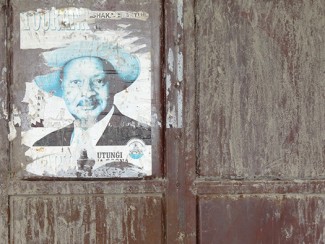
On January 14, 2021, Uganda held presidential and parliamentary elections. Incumbent President Museveni, who has been in power for 34 years, faced off against 10 opposition candidates, including pop star-turned-politician and main contender Robert Kyagulanyi, also known by his stage name Bobi Wine, of the National Unity Platform (NUP). The 2021 elections saw unprecedented state-sponsored violence, harassment of opposition candidates, and repression of civil society.

The democratic transition in Ethiopia is taking a worrisome turn. The sweeping reforms introduced by Prime Minister Abiy Ahmed in 2018 after decades of repressive rule and three years of deadly protests raised hopes for a more just and free society, one in which power is distributed equally among the country’s many ethnic groups. Worryingly, the failure to reach an inclusive political agreement on the way forward has triggered intercommunal violence and conflicts that have left hundreds of people dead and more than 2.7 million displaced throughout the country.

Côte d’Ivoire descended into chaos following the October 2010 elections. One of the enduring lessons from this tragic experience could be that elections should never give a reason to set one’s country on fire. Like it or not, however, presidential elections in Côte d’Ivoire have become a malaise that grips the country every five years. And while the 2015 presidential elections were carried out peacefully, the recent October 2020 elections unfortunately were not. The tensions and violence that accompanied it, though far less devastating, brought back macabre memories of the 2010 post-election carnage that left 3,000 people dead and forced more an a million to flee their homes.

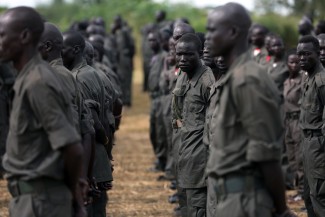
The signing of the Revitalized Agreement on the Resolution of the Conflict in the Republic of South Sudan on September 12, 2018, has been lauded as the best opportunity for peace in the country. However, the continued delays in implementing it, including the establishment of stipulated transitional justice mechanisms, have raised growing concerns within the international community. One essential part of the agreement that has not been executed is the consolidation of the military and the opposition and rebel forces into one army.

In the wake of the mass demonstrations in the United States, activists in European cities similarly took the streets to protest against racism and police violence. In Belgium, mostly young activists have defaced statues of King Leopold II with red paint, insisting public spaces be "decolonized" that commemorate the monarch who personally owned the Congo for more than two decades before relinquishing it to the Belgian government which then controlled it for half a century. Are Belgian and other societies in Europe ready to reckon with the truth of their colonial legacies?

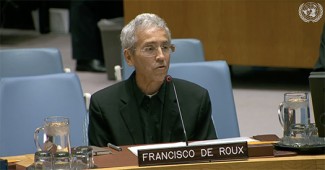
The United Nations Security Council has considered transitional justice on several occasions in the past and included many of its components in country-specific resolutions, and also stressed the links between transitional justice and the other items on its thematic agenda including women, peace and security, and children and armed conflict, and it has made explicit reference to transitional justice as a key part of efforts to sustain peace. Yet, on February 13, the Security Council held its first open debate focusing solely on transitional justice.

As subscribers, you enjoy timely commentary on what’s happening in transitional justice around the world written by one of our experts exclusively for our monthly World Report newsletter. In this month’s edition, we bid farewell to 2019 by looking back on the experts’ choices of the past year.

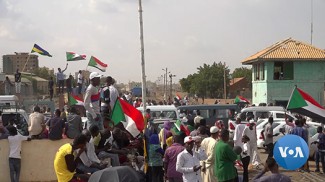
After decades of repressive rules, military coups, and conflicts in the country’s marginalized peripheries, the Sudanese people have come together and proven their resolve to break with the past and begin a new chapter of their nation’s history. Undeterred by a brutal crackdown, thousands of...

The Gambian Truth, Reconciliation, and Reparations Commission (TRRC) started its operations in January 2019 with the public hearings of witnesses, victims, and perpetrators. It has already succeeded in having high-profile perpetrators testify publicly on their role in violations concerning several victims. But the question is, who should be at the center of truth telling?

On September 18, the trial of Dominic Ongwen resumed at the ICC. Ongwen is on trial for 70 counts of war crimes and crimes against humanity – including various forms of sexual violence and the recruitment of child soldiers – committed in the former IDP camps of Lukodi, Odek, Abok, and Pajule during the 20-year insurgency in Northern Uganda. Ongwen is the first former child soldier who is facing trial at the ICC for crimes in which he was also a victim.

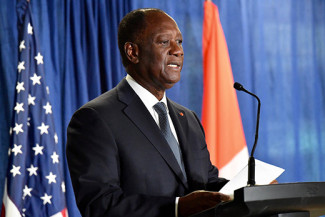
On the eve of Côte d'Ivoire’s 58th independence anniversary, in a dubious attempt at “social cohesion,” President Alassane Ouattara granted amnesty to 800 persons accused or convicted of crimes against the state during the post-election crisis of 2010-2011. Former First Lady Simone Gbagbo — who had been tried for undermining state security — and other high-ranking officials associated with former President Laurent Gbagbo’s party, the Ivorian Popular Front (FPI), were among those released. The lapses in accountability and acknowledgment in Cote d’Ivoire have emboldened perpetrators and made it impossible for many victims to move on with their lives. The challenges of transitional justice processes present clear obstacles to the sustainable peace that the people of Cote d’Ivoire have been working toward.