

616 results

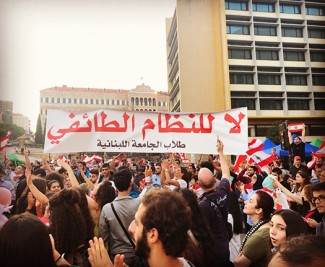
Lebanon’s ongoing “October Revolution” represents the largest decentralized, anti-government protest the country has seen at least since the end of the civil war in 1990. The demonstrations have brought thousands of Lebanese to the streets to condemn widespread corruption among the political class, paralyzing the country for weeks.

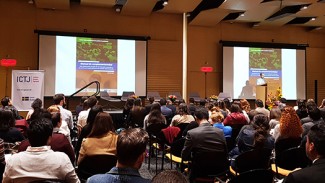
In countries emerging from violent conflict and repression around the world, prosecutors are facing significant challenges and pressures when seeking to investigate and prosecute serious crimes, such as torture, extrajudicial killings, and enforced disappearance. To reflect on these challenges, ICTJ together with the International Nuremberg Principles Academy, and with support from the governments of Australia and Sweden, convened a side event on December 6, 2019, during the 18th Assembly of State Parties of the International Criminal Court.

In 1998, Colombian filmmaker Sergio Cabrera released “Time Out,” a fictional comedy in which guerrilla members and soldiers — usually mortal enemies — call a momentary truce to watch the national soccer team play in the qualifiers for the 1994 World Cup. Twenty years later, former combatants of both sides, members of the security forces, and victims of the conflict came together at Llano Grande in the region of Dabeiba to watch Cabrera’s film and play a game of soccer.

Youth activists and traditional leaders from the city of Duékoué, in western Côte d’Ivoire, gathered on October 15 to discuss how best to strengthen social cohesion and prevent future conflict. The city and surrounding region were among the areas most affected by the violence that broke out across the country following the 2010 presidential elections and that left thousands dead and many more injured, beaten, or raped.

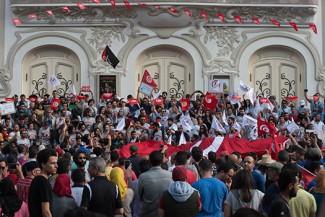
Recently, Tunisia held its third parliamentary elections since the revolution and the second presidential elections since late President Béji Caid Essebssi passed away on July 25, 2019. It remains to be seen if the election’s results will usher in a new era of dignity, for which Tunisians took the streets in 2010 and 2011.

On October 14, The Gambia’s Truth, Reconciliation and Reparations Commission will begin public hearings with women victims who have dared break the nation’s silence around sexual violence. The hearings represent an important step toward the inclusion of women and their experiences in the Gambian truth-seeking process. But we cannot stop there.

Given the political challenges emerging from authoritarian states and conflicts in Africa, what is the best way to pursue accountability for violations of international human rights and humanitarian law on the continent? ICTJ experts Chris Gitari and Howard Varney sit down to discuss regional initiatives, complementarity, and other strategies for pursuing accountability.

“Vetoes and excuses get in the way of what is right and just.” With those words, Amina Khoulani, Cofounder of Families for Freedom, spelled out the failings of the United Nations Security Council, as she described in lurid detail the harsh realities facing families of the disappeared in Syria. Actors with the power to stop the killing of detainees and to free those still imprisoned are forsaking their responsibilities.

The trend of missing and disappeared persons due to conflict remains more prevalent than ever today. Many governments around the world have remained undeterred in their abuse of power to invade a home or community and remove persons deemed to be a threat. This intractable problem has received global attention largely due to the efforts of family members who often risk their lives in pursuit of the right to know and ‍‍to bury their loved ones.

During the Ben Ali dictatorship in Tunisia, Najet Gabsi, an educator pursuing a diploma in law, was imprisoned for six months for her political activities. Through her participation in the "Voices of Memory" art exhibition, she was able to reignite her passion for activism and articulate the harms she endured at the hand of the regime.

Tunis—Youth activists from across Tunisia, representatives of state institutions, and experts from international nongovernmental organizations gathered on July 10, 2019, to discuss challenges to pursuing accountability for corruption crimes committed during the Ben Ali dictatorship and practical steps that civil society and government can take to overcome these challenges.

When the government of Uganda signed the Juba Agreement on Accountability and Reconciliation (AAR) with the rebel group the Lord’s Resistance Army (LRA) in 2007, it committed to establishing concrete measures that would promote accountability, reconciliation, and justice for victims of serious human rights violations stemming from two decades of armed conflict. More than ten years later, on June 17, 2019, Uganda’s Cabinet finally approved the long-awaited National Transitional Justice (TJ) Policy.

Issoumaila Touré grew up during Côte d'Ivoire’s devastating First Civil War (2002-2007), watching his community be torn apart by political manipulations and ethnic differences. When his country once again descended into civil war following the 2010 presidential elections, Issoumaila, then a young man in his early 20’s, came to a major crossroads in his life.

June 20, 2019 — In a tightly packed room at the United Nations, human rights experts gathered for a historic symposium to commemorate a dark chapter of South Korea’s past, the Jeju Uprising and Massacre that began on April 3, 1948, and continued until 1951, which Koreans now refer to as “the 4.3 Jeju” events. Over 100 persons, including notable academic panelists, human rights experts, journalists, diplomats, religious leaders, and peace activists attended the symposium.

Since the 1950s, the FARC had been present in the southern department of Caquetá in Colombia. The local population suffered from decades of armed confrontations between the FARC and the Colombian Army. This is the story of the collective memory project implemented with the El Pato municipal farmers’ association (AMCOP) in the El Pato-Balsillas farmer reserve zone.

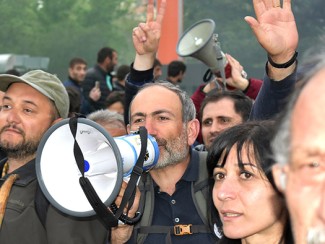
In designing transitional justice in Armenia, policymakers, civil society activists, and international actors should remember those who have not had justice for so long: the families of those killed or injured in March 2008, the victims of torture and political detention, the mothers in black seeking the truth about why their soldier sons were killed, the old pensioners who live in cold and hunger, farmers and rural communities who need access to social services, and students and young citizens who saw that their hope for a better future required a revolution.

This is the second of our Stories of Change series; in it, Tarek al-Massri, an 18-year-old from Homs now living in Germany, knows all too well the horrors of the Syrian conflict and its devastating impact on schools.

When Janet Arach was still a schoolgirl, she was abducted by Joseph Kony’s Lord’s Resistance Army (LRA) in northern Uganda. During her eight years in captivity, she was forced to marry an LRA rebel and gave birth to two children. Read more on Janet's journey to become an agent of change for her community in Uganda.

Regardless of how the world remembers Alex Boraine's legacy—or the success and shortcomings of the truth and reconciliation process in South Africa—history will recall that Boraine withstood his own, and his nation’s, transitions to cement his legacy as an architect for truth and reconciliation and a champion for justice for victims.

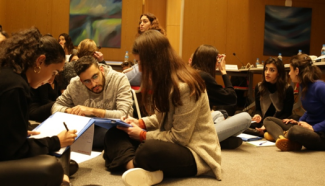
ICTJ’s Gender Symposium, held on February 2 to 4, 2019, in Tunis, Tunisia, brought together fearless women leaders working in 8 countries to advance the needs of victims and to bring gender issues to the center of transitional justice processes. What was achieved? What experiences cut across these diverse contexts? Kelli Muddell and Sibley Hawkins reflect on these questions and more in this short podcast.

We sat down with Roger Duthie, ICTJ’s senior research expert, to reflect on the findings from the new report, An Uncertain Homecoming: Views of Syrian Refugees in Jordan on Return, Justice, and Coexistence, and the prospects for Syrian refugees if and when the conflict ends.

The new ICTJ report, An Uncertain Homecoming: Views of Syrian Refugees in Jordan on Return, Justice, and Coexistence, presents findings from a study based on interviews with 121 Syrian refugees living in Jordan. It documents the views, expectations, and priorities of these men, women, and children on the prospects of returning home and on future coexistence and justice in Syria.

On April 11, 2019, Jaqy Mutere, cofounder and coleader of Grace Agenda, accepted an award from Physicians for Human Rights recognizing the work of the Survivors of Sexual Violence in Kenya Network and Grace Agenda, a leader in this movement. Jaqy cofounded Grace Agenda after she began working with women who, like her, had experienced sexual violence during the protests that erupted in Kenya after the contested December 2007 elections.

From February 22 to March 1, ICTJ held its annual retreat in Litchfield Hills, Connecticut. Staff members convened at the Wisdom House—an interfaith conference center that seeks to provide an environment conducive to introspection and teambuilding.

The internationally acclaimed documentary “The Silence of Others" about the forgotten victims of Franco's fascist dictatorship in Spain brings much-needed attention to the right to the truth.

On February 14, Kenyans once again confronted their painful relationship with law enforcement and revisited the deep mistrust born of historical abuses. In an unprecedented ruling, a court found five senior police officers potentially culpable in gruesome murder during the police response to the 2017 post-election protests. On the same day, a senior police officer was convicted of murder and jailed for life.

With the conclusion of the mandate of the Truth and Dignity Commission (TDC), ICTJ looks back on the major events in Tunisia stemming from the Arab Spring that led to the TDC's creation, which involved the participation of a broad spectrum of people representing the country's multifaith, politically divided, and economically stratified society.

In December 2018, we mourned the loss of ICTJ's founder, Alex Boraine. On December 12, Fernando Travesí sat down for an intimate conversation with Vincent Mai—ICTJ’s first chairman—to learn more about a life that we will continue to commemorate in the months and years to come.

On February 8, at the Peace Palace in The Hague, the high-level international Task Force on Justice will meet to finalize its report on increasing access to justice for people and communities around the world—or reducing the “justice gap”—as an integral element of the Sustainable Development Goals (SDGs).

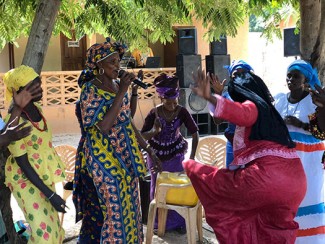
Kaneleng are women who cannot bear children or whose children died at an early age. At a two-day summit held in December 2018, 25 kaneleng received training on transitional justice concepts. They worked to develop songs, comedy, and dramas that they will use to present justice messages through their work as traditional communicators.

On January 15, 2019, victims of the 2010-2011 post-election violence in Côte d'Ivoire were shocked, yet again, to learn that the Trial Chamber I of the International Criminal Court in The Hague had acquitted former President Laurent Gbagbo and the former Youth Minister Charles Blé Goudé of crimes against humanity allegedly committed during the crisis.

As the work of Tunisia's Truth and Dignity Commission winds down, ICTJ's Salwa El Gantri and Kelli Muddell discuss some of the challenges and successes of its work and their vision for transparent, participatory processes to advance Tunisia’s transitional justice mandate in the short and long term.

The Task Force on Justice is gathering inputs in order to encourage greater provision of justice to people and communities outside the protection of the law. As the Task Force has pointed out, the “justice gap” that it seeks to reduce is greatest in conflict-affected countries, where only 3 percent of development assistance goes to justice.

Many countries have endured a violent past or a dictatorship that left behind a trail of human rights violations. During transitions to peaceful societies or democracies, there is a need to address that painful past to ensure that the violations do not recur in future. While some countries have made or are making laudable efforts to deal with the atrocities of the past, others like Kenya are regrettably still at the phase of wishing the painful past away.

Dr. Alex Boraine, founder of the ICTJ, was larger than life. In his long career, he touched the lives of thousands in his beloved South Africa and around the world.

On Friday, October 19, ICTJ welcomed the Special Rapporteur on the Human Rights of Internally Displaced Persons (IDPs), Ms. Cecilia Jimenez-Damary, at its headquarters in New York, where she gave an informal presentation. Jimenez-Damary’s eye-opening report on the human rights of IDPs takes up the crucial importance of including the voices and concerns of IDPs in transitional justice mechanisms.

During a forum held in Bogotá, Colombia, on November 1, 2018, ICTJ launched the Spanish-language version of its Handbook on Complementarity: An Introduction to the Role of National Courts and the ICC in Prosecuting International Crimes. The Deputy Prosecutor of the International Criminal Court (ICC), James Kirkpatrick Stewart, gave the keynote address.

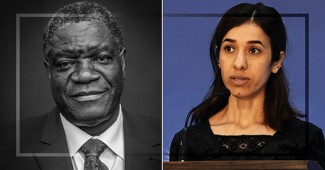
Recent recognition of the work of Nobel Laureate Nadia Murad has drawn global attention to the issue of sexual violence and gender-based violence in conflict. But, as ICTJ Expert Kelli Muddell argues, the nuances of gender norms and how they impact women, men, and vulnerable populations are still often missing from conversations about victims.

Victims in Nepal have been calling on the government for public consultation to ensure wider discussion, a process that would allow them to share their expectations, help them to comprehend the dense language of the proposed amendments and its many gaps. They needed to understand the dubious phrasing especially on issues of criminal accountability that created suspicion, instead of trust and legitimacy in the process.

From October 1 to October 5, 2018, ICTJ hosted its eleventh intensive course on transitional justice in collaboration with the International Peace Center for in Barcelona. Participants included leaders in their respective fields, including human rights law, community justice and legal services, peacebuilding, education, and humanitarian affairs.

Diala Brisly and Hani Abbas, two cartoonists and contemporaries, know firsthand the power of images to document conflict, and of cartoons —consumed by children and adults alike —to promote action.

For 21 years, the people of The Gambia lived under the dictatorship of military strongman Yahya Jammeh. Now, The Gambia is working to step up to the challenge of unpacking the past, building a brighter future, and ensuring that it never relapses into repression, violence, and exclusion. The ICTJ spoke with Dr. Baba Galleh Jallow and Musu Bakoto Sawo, the Executive Secretary and Deputy Executive Secretary of the TRRC, respectively, to hear their insights about their work and how the TRRC can build upon other efforts to put victims at the forefront of The Gambia’s transformation .

In July, ICTJ’s Program Director Anna Myriam Roccatello and Senior Transitional Justice Expert Ruben Carranza traveled to Yerevan to meet with civil society organizations, human rights and anti-corruption activists, and key government officials, to join them in exploring strategies for change.

A new report on attacks on schools in Syria harnesses documentation to call attention to atrocities and advance storytelling, truth seeking, acknowledgment. It is the product of Save Syrian Schools, a collaborative project led by 10 Syrian civil society organizations and the ICTJ that demands an end to the killing of Syrian children and justice for the bombing of schools.

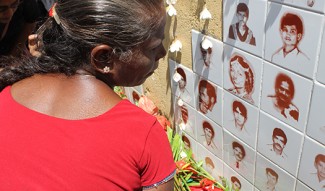
Enforced disappearances continue to affect hundreds of thousands of people around the world. The hopes of Sri Lankan victims reached a peak in 2015, when President Maithripala Sirisena was elected on a centrist platform and a commitment to truth, justice, and reconciliation. Later that year, the Sri Lankan government agreed to a UN Human Rights Council resolution that offered a roadmap for the search for the missing and forcibly disappeared. To the dismay of many, however, the government has done little since to implement these commitments and to take the opinions of victims seriously.

In the dynamic political landscape that has emerged following 50 years of conflict, Colombia is taking steps toward truth and accountability. The Commission for the Clarification of Truth, Coexistence, and Non-Repetition (the “Commission”) is scheduled to begin taking statements in November 2018. As part of its mandate, it will hear the stories of victims now living throughout the Diaspora.

Indigenous peoples are still some of the most marginalized and vulnerable communities around the world. In a conflict, they are often some of the most affected as their resource-rich territories are coveted by powerful and violent groups, their identity and loyalty perceived with mistrust, and their...

The announcement by the Executive Committee of Ethiopia’s ruling party that the country will implement the 2002 Algiers peace agreement and decisions of the Ethiopia-Eritrea Boundary Commission brings hope that a 20-year war that divided families and communities is finally over.

For years, ICTJ has championed the media and the role it plays in supporting truth-seeking and advancing accountability and redress for victims of conflict-related atrocities. In the places where we work, from South Africa, to the Gambia, Guatemala, Colombia and the Philippines, media projects and coverage—both mainstream and alternative—have been crucial in ensuring participation, mediating public discourse, contributing to acknowledgment for victims, and revealing long-hidden truths about crimes. This month, we share a dispatch from our work in Uganda.

In these convoluted times, when terrible news dominates the headlines and overwhelms our hearts and minds, it is sometimes comforting to remember the words of Martin Luther King, Jr.: “The arc of the moral universe is long, but it bends towards justice.” News from Spain on recent progress toward justice for victims of fascism may offer some inspiration, and it is why I picked this story from the many unfolding around the world to comment on in this month's World Report.