629 results

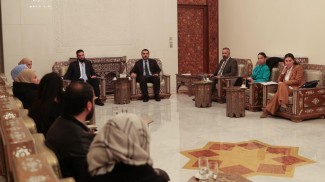
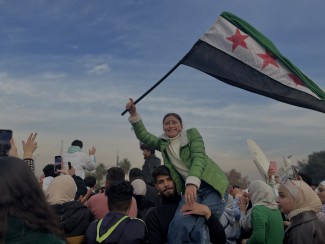
On February 1, 2025, ICTJ facilitated a meeting between family members of the missing and detainees and Syria’s transitional president, Ahmed Al-Sharaa, and the minister of foreign affairs, Asaad Al-Shaibani, at the Presidential Palace in Damascus. Attendees presented a number of specific urgent demands related to the missing and forcibly disappeared, while President Ahmed Al-Sharaa underscored the government’s commitment to the issue.

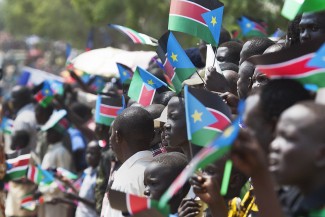
South Sudan’s transition to democratic governance through a highly anticipated, first-ever post-independence general election has to wait once again for another two years. Despite this latest extension, the country has achieved notable milestones in its transitional justice process.

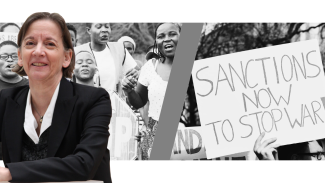
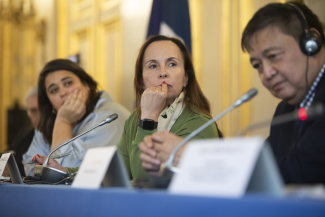
As part of the new digital campaign "Reparations Build Justice," the ICTJ team would like to share the keynote address given by ICTJ Director of Programs and Deputy Executive Director Anna Myriam Roccatello at a recent conference on issues related to providing reparations through international criminal courts. In her remarks, Roccatello describes the inextricable link between accountability and reparation as well as ICTJ’s unwavering commitment to victims of massive human rights abuses.
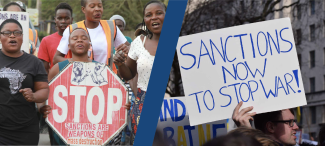
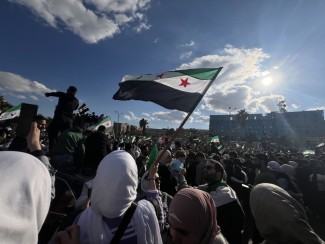
The fall of Bashar al-Assad’s regime after 53 years of authoritarian rule marks a significant moment in the pursuit of justice, peace, and human rights. While this transition opens the door to new possibilities, it also underscores the immense obstacles and responsibilities that lie ahead.

Drawing from data and testimonies of Syrians both inside the country and in the diaspora collected by civil society organizations, this report looks at the justice needs of Syrian victims of human rights violations in the context of ongoing debates on refugee returns. It critically ex...

Illustration depicting an elderly woman carrying an armchair on her back

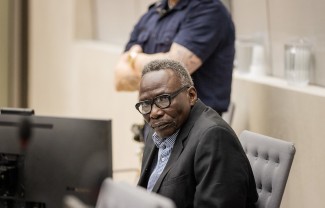
ICTJ accompanied more than 10 Sudanese victim stakeholders to the International Criminal Court (ICC) in The Hague to attend the closing statements in the case of The Prosecutor v. Ali Muhammad Ali Abd-Al-Rahman ("Ali Kushayb"). The statements took place on December 11 to 13. ICTJ supported the ICC in the selection of the stakeholders, who were chosen for their strong ties with affected communities.

Customary justice is the primary way in which most communities in South Sudan resolve disputes. Its ability, however, to deal with massive human rights violations is limited due to the complexity of intercommunal violence and a lack of clarity on its proper role. This report contends ...

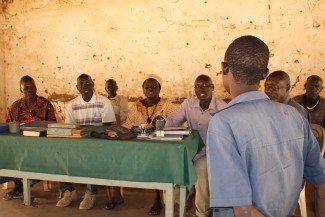
A man stands facing a table around which several men are seated.

In countries where state institutions have limited reach, customary and informal justice is often the most common way in which people resolve disputes and seek justice. Given its prominence, it is considered to be an important element of a people-centered approach to building peaceful, just, and inclusive societies. An understanding of the relationship between customary justice and transitional justice, however, remains underdeveloped. A new ICTJ report provides valuable empirical, qualitative research on the topic, in the context of South Sudan.

This report serves as practical guide for those working in truth commissions and fact-finding bodies to convert large amounts of data and information into a final report. The manual draws on real life experiences from multiple truth commissions and includes extracts and examples from ...

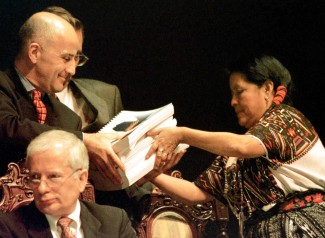
A man takes in his arms a large stack of reports from a woman.

In societies grappling with the legacies of mass atrocities, truth-seeking bodies and the reports they produce can be instrumental in exposing culpability, revealing root causes, and preventing a recurrence of violence or repression. A new ICTJ research report serves as a practical guide for those working in truth commissions and fact-finding bodies on how to convert large amounts of data and information into credible reports.

Two and a half years after Russia’s full-scale invasion of Ukraine, victims continue to demand justice for the massive violations they have suffered, which have left many of them gravely harmed. The International Criminal Court opened an investigation into alleged crimes in March 2022. It now faces a critical challenge: how to ensure that Ukrainian victims can meaningfully participate in all stages of its procedures, despite the court’s location far from the conflict.

In this era of technological transformation, it is critically important to develop digital strategies for documenting human rights violations, analyzing data for accountability or reparations purposes, and safely advocating for human rights online. This is particularly true in contexts where victims, human rights actors, and members of the media live in fear. To this end, ICTJ has recently led trainings for human rights activists in conflict-affected countries on open-source investigation tools to help them do their work more effectively.

The field of transitional justice is increasingly recognizing the relevance of mental health and psychosocial support (MHPSS) in contexts of massive human rights violations. Despite growing advocacy and awareness at the global policy level, however, the field lacks a systematic approa...

an image of colorful painting featuring a young girl

The field of transitional justice increasingly recognizes the relevance of mental health and psychosocial support in contexts of massive human rights violations. Despite growing advocacy and awareness at the global policy level, however, the field lacks a systematic approach to the issue. Now, a new ICTJ report contributes to such an approach.

Almost eight years since The Gambia's former President Yahya Jammeh left power, the country is still seeking justice for the human rights abuses committed during his 22-year dictatorship. In May 2023, the Ministry of Justice released a plan to implement the recommendations of the country's Truth, Reconciliation and Reparations Commission. While the plan promises to deliver justice and repair harms, for it to have its intended impact, it requires broad public participation in the process, especially that of young people. With that in mind, ICTJ has partnered with the UN Peacebuilding Fund on a project to encourage Gambian youth to take a leading role in this process and the country's future.

In July, Colombian President Gustavo Petro traveled to New York to address the UN Security Council on the status of the implementation of the 2016 peace agreement between the Colombian government and the guerrilla group Revolutionary Armed Forces of Colombia. During his visit, Petro also inaugurated a monument commemorating the country's enduring pursuit of peace.

ICTJ advocates for the inclusion of mental health and psychosocial support (MHPSS) in all transitional justice initiatives and undertakes research on best practices for the field. Leading this work is ICTJ Senior Expert Virginie Ladisch. She is the lead author of the forthcoming report, ‘The Search for People’s Well-Being’: Mainstreaming a Psychosocial Approach to Transitional Justice. In this interview, Ladisch discusses the importance of MHPSS for transitional justice and her work on the topic.

This past month, the United States officially observed Juneteenth for the fourth time since President Joe Biden declared it a federal holiday in 2021. Commemorations are a chance to acknowledge past milestones and reflect on their relevance to the present. In the spirit of Juneteenth, it is important to highlight and celebrate the wins and progress made toward fulfilling the promise of liberty for all.

In February 2024, the Office of the United Nations High Commissioner for Human Rights hosted an event in Seoul, South Korea, marking the 10th anniversary of the release of the report of the United Nations Commission of Inquiry on Human Rights in the Democratic People's Republic of Korea. ICTJ Senior Expert Ruben Carranza spoke at the event and discussed lessons learned involving nonjudicial forms of accountability. In this interview, he talks about why a broader approach to transitional justice is necessary and how transitional justice measures can help promote peace and possible reunification on the peninsula.

On June 5 and 6, 2024, the African Union (AU) and the European Union (EU) hosted the fourth edition of the AU-EU Experts’ Seminar on Transitional Justice in Brussels, Belgium. The consortium implementing the Initiative for Transitional Justice in Africa, led by ICTJ, helped organize the event. The seminar explored how transitional processes can transform individual lives, societal relations, and dysfunctional state institutions.

Thirty years after the 1994 genocide against the Tutsi in Rwanda, painful memories of those gruesome 100 days, during which almost one million Rwandan citizens lost their lives, still haunt the people of Rwanda, the rest of Africa, and the world. It is a solemn occasion to remember and honor the victims and survivors of the genocide and to acknowledge the tremendous strength and resilience they have shown in the wake of unspeakable tragedy. However, it is also a time for candid introspection on the African continent, and around the world, about the policies and mechanisms in place to prevent such atrocities.

The Arabic word “Zyara” means “visit” in English. The Zyara documentary series takes an innovative, deeply personal approach to storytelling with a view to nurturing collective social and emotional healing. Through candid encounters, it paints poetic portraits of four Yemenis refugees living in Oman, including a human rights lawyer and activist, a restaurant worker, a martial arts champion, and a businessman. By telling their stories and celebrating the resilient spirit of the Yemeni people, the Zyara project seeks to raise awareness and preserve truth and memory.

In the aftermath of armed conflict or repression, communities often struggle to rebuild social relations that have been damaged or destroyed by violence and abuse. Restorative justice can potentially play a valuable role in such societies, bringing together the people who have been harmed by crimes and the individuals responsible for those harms, often in the form of a dialogue, to address the offense and its consequences. A new ICTJ research report offers insight and guidance on the use of a restorative justice framework in responding to massive and grave human rights violations, drawing primarily from experiences in Colombia, Sierra Leone, Tunisia, and the Philippines’ Bangsamoro region.

This research report offers guidance on the application of a restorative justice framework in contexts of massive human rights violations, including its advantages and challenges. Based on the experiences of Colombia, Sierra Leone, Tunisia, and the Philippines, the study examines how ...

A man and audience member holds his phone to record proceedings of panel on the stage in front of him.
On February 13, 2024, the interactive cultural exhibit “If There Is Truth, There Is Future” opened to the public at Bogotá’s Center for Memory, Peace and Reconciliation. As part of the Colombian Truth Commission’s post-closure cultural and educational outreach activities, the exhibit aims to inform Colombians of all generations about the commission’s findings and inspire them to take action to prevent a recurrence of conflict.