





480 results

Colombia currently faces a transformed, fragmented form of violence centered on territorial and social control rather than the traditional insurgency. This briefing paper argues that state security strategies remain misaligned, relying on outdated military approaches and metrics. To a...

Image of first page of the briefing paper "From Combat to Territorial Control"

Colombia currently faces a transformed, fragmented form of violence centered on territorial and social control rather than the traditional insurgency. This report argues that state security strategies remain misaligned, relying on outdated military approaches and metrics. To avoid lon...

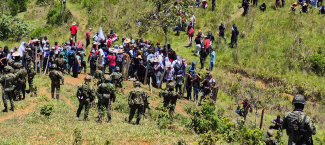
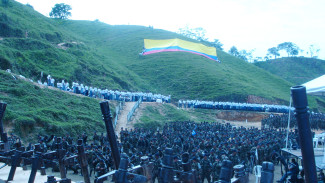
An aerial view of a group of soldiers interacting with a large civilian crowd in a rural setting

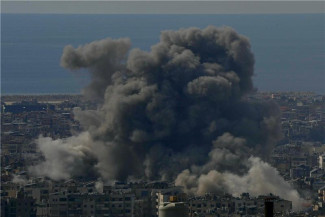
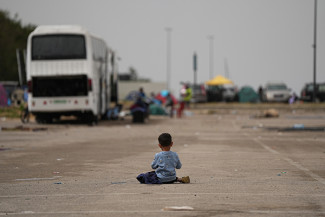
Recent Israeli strikes in Beirut and other populated areas in Lebanon, among the conflict's most intense so far, have destroyed critical infrastructure and devastated civilian communities. ICTJ stands unequivocally with the Lebanese people and all victims across the region and calls for an immediate end to all attacks on and threats to civilian communities and infrastructure.

ICTJ is watching with grave concern the unfolding war launched by the United States and Israel against Iran and its devastating ripple effects across the wider region. Over a month into the conflict, the human cost is staggering. We at ICTJ reaffirm the international principles that govern our shared world and stand unequivocally with all victims across the region.

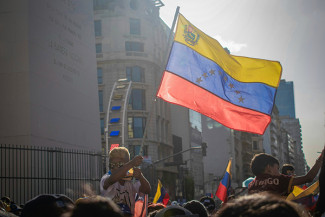
On February 19, 2026, Venezuela’s National Assembly passed the Amnesty Law for Democratic Coexistence, which seeks to extinguish criminal liability for certain acts committed in the country over the past 26 years. While the law has sparked debate, it undeniably represents a significant development in the country's political landscape.

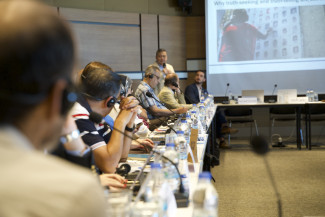
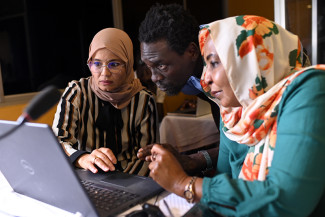
ICTJ recently convened human rights defenders, journalists, and lawyers from Libya, Sudan, Syria, Tunisia, and Yemen for a workshop on digital, open-source investigations. Held on November 3-8 in Kampala, Uganda, the course trained participants on open-source tools with a view to strengthening their work investigating, documenting, and monitoring human rights violations.

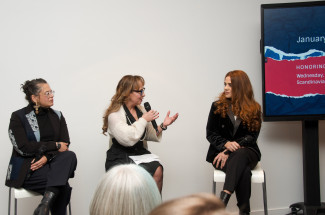
On January 28, 2026, ICTJ held its annual January for Justice Leaders benefit dinner in New York City, an event celebrating leaders advancing justice around the world. This edition also marked the beginning of ICTJ’s 25th anniversary year and served as an opportunity to look back on a quarter century spent standing alongside victims, civil society, and institutions in the pursuit of truth, accountability, and lasting peace after mass atrocities.

The outlet PassBlue recently interviewed ICTJ Executive Director Fernando Travesí-Sanz about the challenges and breakthroughs ICTJ has encountered while facilitating a victims-led path to transitional justice in post-Assad Syria. Travesí-Sanz compared the experience to the lessons learned from Colombia’s post-conflict transition, revealing the nuanced, fragile nature of both retroactive justice and long-term peacebuilding.

To commemorate the 20th anniversary of the Justice and Peace Law—which created Colombia's first transitional justice system—media outlet Verdad Abierta, the Friedrich Ebert Stiftung, and ICTJ partnered to produce an investigative four-part series in Spanish that critically assesses its legacy. Now translated into English, this second installment explores the unprecedented challenges the country faced as the process got underway.

To commemorate the 20th anniversary of the Justice and Peace Law—which created Colombia's first transitional justice system—media outlet Verdad Abierta, the Friedrich Ebert Stiftung, and ICTJ partnered to produce an investigative four-part series in Spanish that critically assesses its legacy. Now translated into English, this first installment provides an overview of the process.

To commemorate the 20th anniversary of the Justice and Peace Law—which created Colombia's first transitional justice system—media outlet Verdad Abierta, the Friedrich Ebert Stiftung, and ICTJ partnered to produce an investigative four-part series in Spanish that critically assesses its legacy. ICTJ has now translated the first two installments into English.

Throughout 2025, ICTJ’s experts offered thoughtful analysis on conflicts and major political developments in more than 10 countries as part of the World Report newsletter. Their insightful commentaries shed light on the obstacles that victims, civil society, and their partners must navigate as they pursue sustainable peace and justice. In this edition, we look back on the past year through the Expert’s Choice column.

This report assesses the gender sensitivity of the African Union Transitional Justice Policy (AUTJP). Drawing on continental practice and scholarship, it identifies opportunities for AU member states, civil society, and donors to strengthen the policy’s implementation and its responsi...

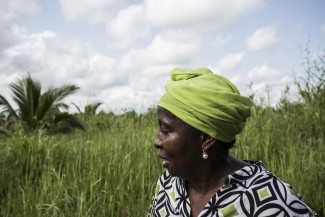
A woman stands in the profile position in a field of green plants on a sunny day with a clear blue sky

This year, Colombia commemorates the 20th anniversary of the Justice and Peace Law, which established the country’s first formal transitional justice mechanism. On this milestone anniversary, ICTJ reflects on the evolution that led to the groundbreaking law, the lessons that have been learned so far, and the challenges that lie ahead.

As part of a transitional justice process, truth commissions are crucial mechanisms for clarifying the past and safeguarding victims’ rights. With over 50 truth commissions worldwide, they remain relevant in increasingly complex contexts shaped by rapid technological change and challe...

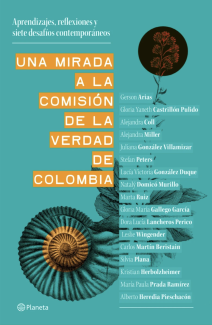
Cover of the book Una mirada a la Comisión de la Verdad de Colombia

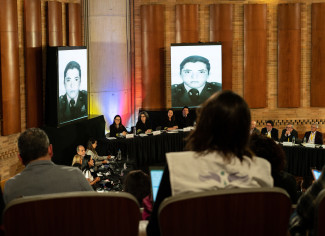
The issuance of the first sentences by Colombia’s Special Jurisdiction for Peace marks a turning point for transitional justice in the country. These historic convictions against those most responsible for war crimes and crimes against humanity committed during the armed conflict constitute the realization of justice and express both judicial and moral condemnation.

ICTJ, in collaboration with the Center for Media Integrity of the Americas, the Cyrus R. Vance Center for International Justice, and the New York City Bar Association, recently hosted a screening of the Colombian documentary Después del Frío ("After the Cold"). Coproduced by ICTJ and Colombian journalist María Jimena Duzán, with the support of the Embassies of Sweden and Norway in Colombia, the film paints an intimate portrait of a nation seeking healing and transformation, where the scars of the past give way to hope.

This year, Colombia commemorates the 20th anniversary of Law 975, which established the country’s first transitional justice process, called Justicia y Paz (or Justice and Peace). With this anniversary top on mind, and as the current government engages with eight of the remaining armed groups in pursuit of its “Total Peace” strategy, ICTJ recently teamed up with podcast producers Sillón Estudios to create a four-part series that delves into the peace process with the AUC and considers key lessons learned.

On December 2 to 6, 2024, the International Criminal Court’s (ICC) Assembly of States Parties—the court’s management oversight and legislative body—held its 23rd session in The Hague. As in previous years, ICTJ took an active part, and its experts joined many of the discussions sharing their knowledge and insight. ICTJ organized two side events, one focusing on Syrian victims and another on reparations for victims in Northern Uganda.

In February 2024, the International Criminal Court (ICC) delivered its long-awaited reparations order in the case of The Prosecutor vs. Dominic Ongwen. Nearly two decades after the ICC intervened in Northern Uganda, this milestone decision both acknowledges the suffering of survivors and underscores the complexities and limitations of international justice. For victims who have waited for justice for over two decades, the order has been bittersweet.

The field of transitional justice is increasingly recognizing the relevance of mental health and psychosocial support (MHPSS) in contexts of massive human rights violations. Despite growing advocacy and awareness at the global policy level, however, the field lacks a systematic approa...

an image of colorful painting featuring a young girl

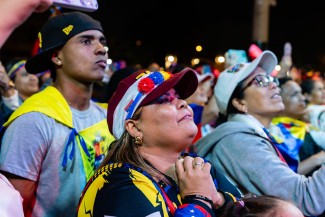
In the wake of the recent contentious presidential elections, Venezuelans from all walks of life took to the streets to express their collective distrust of the official results, outrage over their country's dire economic and political crisis, and demand for transformative change. For a brief moment, their sheer numbers and the of unity of their voices gave hope that a window of opportunity had opened for real change. In countries grappling with massive human rights violations, from time to time, a window of opportunity does in fact open for society to come together and a forge path toward peace and justice. Unfortunately, such windows do not remain open indefinitely.

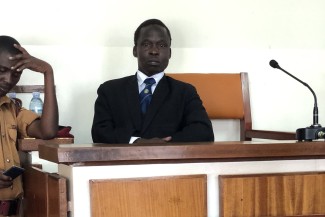
On August 13, 2024, the International Crimes Division of the High Court of Uganda delivered its long-awaited verdict in the case of Uganda versus Thomas Kwoyelo, a former commander and colonel in the rebel group the Lord’s Resistance Army. Mr. Kwoyelo was convicted on 44 counts of crimes against humanity, war crimes, and other serious crimes committed during the decades-long armed conflict in Northern Uganda between the LRA and the Ugandan government. This judgment represents a significant milestone in the pursuit of justice and accountability and a crucial step toward acknowledging the suffering of the victims of these horrific mass atrocities.

This past month, the United States officially observed Juneteenth for the fourth time since President Joe Biden declared it a federal holiday in 2021. Commemorations are a chance to acknowledge past milestones and reflect on their relevance to the present. In the spirit of Juneteenth, it is important to highlight and celebrate the wins and progress made toward fulfilling the promise of liberty for all.

In 2022, the Total Peace law was passed in Colombia, through which the government seeks to negotiate and reach agreements with armed organizations that still exist in the country. On June 19, 2024, the current director of ICTJ Colombia, Maria Camila Moreno, was appointed to be a member of the negotiating team that will help develop the peace dialogue table with the armed group Segunda Marquetalia.

In the aftermath of armed conflict or repression, communities often struggle to rebuild social relations that have been damaged or destroyed by violence and abuse. Restorative justice can potentially play a valuable role in such societies, bringing together the people who have been harmed by crimes and the individuals responsible for those harms, often in the form of a dialogue, to address the offense and its consequences. A new ICTJ research report offers insight and guidance on the use of a restorative justice framework in responding to massive and grave human rights violations, drawing primarily from experiences in Colombia, Sierra Leone, Tunisia, and the Philippines’ Bangsamoro region.

This research report offers guidance on the application of a restorative justice framework in contexts of massive human rights violations, including its advantages and challenges. Based on the experiences of Colombia, Sierra Leone, Tunisia, and the Philippines, the study examines how ...

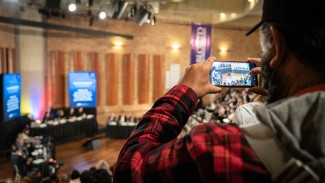
A man and audience member holds his phone to record proceedings of panel on the stage in front of him.

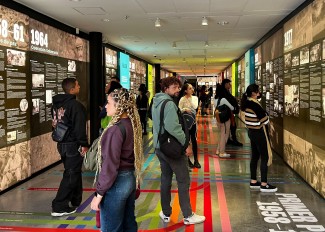
On February 13, 2024, the interactive cultural exhibit “If There Is Truth, There Is Future” opened to the public at Bogotá’s Center for Memory, Peace and Reconciliation. As part of the Colombian Truth Commission’s post-closure cultural and educational outreach activities, the exhibit aims to inform Colombians of all generations about the commission’s findings and inspire them to take action to prevent a recurrence of conflict.

As part of its mandate, Colombia's Commission for the Clarification of Truth carried out 68 processes of acknowledgment led or supported by a specialized team. These processes sought to acknowledge victims and the harms they suffered, as well as individual or collective responsibiliti...

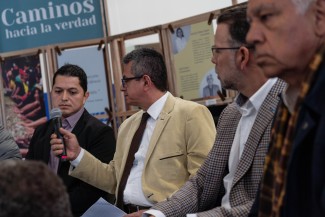
Former guerrilla member Gabriel Ángel holds the microphone for former paramilitary member Nodier Giraldo during an event at the Truth Commission.

On November 28, 2023, ICTJ organized an international dialogue in Bogotá, Colombia, to share innovative strategies for advancing victims’ rights to redress for human rights abuses and for establishing more victim-centered development policies. The gathering also marked the official launch of ICTJ’s new report—Advancing Victims’ Rights and Rebuilding Just Communities Local Strategies for Achieving Reparation as a Part of Sustainable Development—which presents findings from a two-year comparative study of local efforts in Colombia, The Gambia, Tunisia, and Uganda to advance reparations.

What does the obligation to provide reparations mean when serious human rights violations are at issue? This report explores the evolving interpretation of the right to reparation in international law and jurisprudence and how domestic courts have provided judicial reparations at the ...

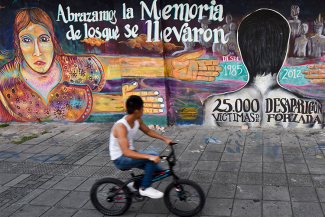
A man on a bicycle rides past a building whose exterior wall is covered in a colorful mural with writing in Spanish.

Throughout 2023, ICTJ’s experts have offered their unique perspective on breaking news around the globe as part of the World Report. Their insightful commentaries have brought into focus the impact these events have on victims of human right violations as well as larger struggles for peace and justice. In this edition, we look back on the past year through the Expert’s Choice column.

This comparative study examines strategies used by local actors to help operationalize reparations for victims of widespread human rights violations, while highlighting the synergies between these efforts and sustainable development. It is based on the fieldwork of ICTJ and its partne...

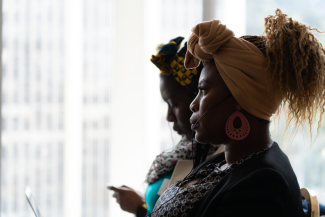
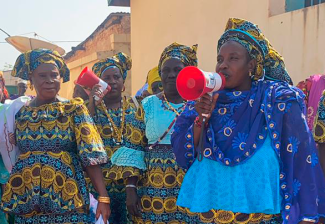
A women in colorful African dress holds a megaphone to her mouth

On November 28, ICTJ hosted an international conference to explore the synergies between reparations and sustainable development in Bogotá, Colombia. The event, titled “Advancing Victims’ Rights and Rebuilding Just Communities: An International Dialogue on Reparations and Sustainable Development,” brought together ICTJ partners from The Gambia, Tunisia, and Uganda along with civil society and government representatives from Colombia to discuss local strategies for advancing reparations for human rights abuses and how repairing victims and affected communities can contribute to local and national development. On the occasion, ICTJ also launched a new research report on the topic.

The study of macro-criminality is critically important to transitional justice and specifically to efforts to pursue accountability for large-scale, systematic human rights violations. To help enliven debates concerning macro-criminality and broaden access to them, ICTJ has translated into Spanish for the first time ever the seminal essay "Can Politics Be Criminalized?" written by German criminologist Herbert Jäger.

Eight years ago, the United Nations General Assembly declared June 19 as the International Day for the Elimination of Sexual Violence in Conflict in an effort to raise awareness about this endemic tactic of war; honor the innumerable victims and survivors across the world, as well as those working to end these violations; and ultimately eradicate this dehumanizing practice. History has shown that whenever there is a political or security crisis juxtaposed with a militarized response, conflict-related sexual violence is deployed as a tactic to subdue, dehumanize, and terrorize civilians and opponents.

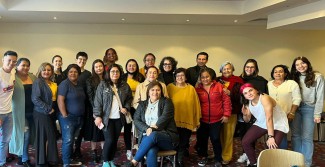
In societies grappling with conflict or repression, LGBTQ+ individuals are often targeted with violence and discrimination and experience some of the cruelest human rights violations. In 2022, Colombia Diversa began collaborating with members of ASFADDES, a prominent association of relatives of the missing or disappeared in Colombia. In June, 24 representatives from the two organizations met in Bogotá to for a series of workshops in which they exchanged knowledge and best practices and developed a better understanding of how to search for missing or disappeared LGBTQ+ persons.

This year marks the 50th anniversary of the hip hop movement. To honor its contributions to the struggle for justice, truth, and equality, the Skoll Foundation hosted a panel discussion and concert event featuring hip hop artists, including cofounder of the legendary rap group Run-DMC Darryl McDaniels and Colombian rapper and producer Ali aka Mind, as part of its 20th World Forum held in April in Oxford, United Kingdom. ICTJ, which received the Skoll Award for Social Innovation in 2009 and has partnered with the Skoll Foundation since, invited Ali aka Mind as a representative of Rexistencia Hip Hop, an artistic mentorship and creation lab led by ICTJ’s office in Colombia and the Latin American media outlet and foundation Cartel Urbano.

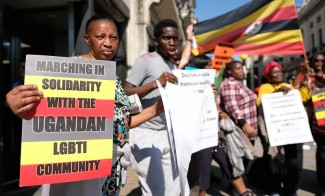
On March 21, the Ugandan Parliament passed the Anti-Homosexuality Bill, adopting the harshest anti-LGBTQ+ law in the world. Under it, homosexuality is punishable by life imprisonment, while "aggravated homosexuality" is punishable by death. The bill not only threatens the rights of LGBTQ+ persons, it undermines and erodes Uganda’s commitment to human rights.

Colombia’s new president Gustavo Petro was elected to office on a progressive campaign to strengthen democracy, implement social reforms, and bring “total peace” to the country. His approach to peace encompasses political negotiations with all remaining insurgent groups and simultaneous dialogues with criminal organizations geared toward their voluntary submission to justice in exchange for punitive leniency. But eight months into his administration, Petro’s efforts to deliver on his campaign promise are facing numerous challenges.

The end of 2022 in Venezuela was marked by signs of willingness from all parties to take concrete steps toward democracy. The government and the opposition resumed negotiations and agreed to allow the United Nations to manage a fund for billions of dollars of frozen assets, which would be gradually released to address the country’s humanitarian crisis. The United States authorized the Chevron Corporation to resume limited operations for importing Venezuelan oil. Finally, the 2015 National Assembly voted to end the opposition-led interim government. While these steps are initial ones to create the conditions for trust among the parties, they offer opportunities to improve the dire circumstances in which many Venezuelans currently live.

In a fast-changing world, ICTJ regularly reexamines and adapts its methodology to develop innovative solutions to emerging problems, advance its mission, and achieve justice for victims of human rights violations. In that spirit, ICTJ recently launched an exciting new website and newsletter design. After over a year of research, planning, surveying stakeholders, designing, and testing, we unveiled a site that better aligns with what ICTJ and transitional justice are today.

ICTJ is more than two decades old. At the time it was established, many of those who contributed to transitions in Argentina, Chile, Guatemala, South Africa, and the former Yugoslavia saw the value of a specialized organization that could draw from diverse national experiences to prov...

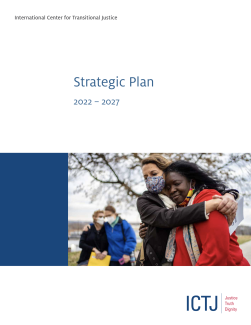
The cover of a report with the text, "2022-2027, Strategic Plan," with an image of people embracing underneath.

Throughout 2022, ICTJ’s experts weighed in on breaking news in more than 10 countries, offering incisive analyses of the political dynamics behind the coverage and the implications for justice, peace, and the rights of victims. In this December edition of the World Report, we look back at the year that was through our Expert’s Choice commentaries, bringing you all of our team’s valuable insights together in one place.

The United States has never collectively confronted its history of colonialism, slavery, and racism in an effort to reform the systems that perpetuate harms to Black communities and other marginalized groups, or to redress these wrongs. Events in recent years, however, have amplified calls for meaningful action to reckon with the past. Given that truth seeking is integral to the investigation of past wrongs, ICTJ and a coalition of practitioners from multiple law firms has released a new report that examines the experiences of official truth commissions from around the world to identify relevant considerations for US stakeholders.

The United States has never collectively confronted its history of colonialism, slavery, and racism in an effort to reform the systems that perpetuate harms to Black communities and other marginalized groups, or to redress these wrongs. Events in recent years, however, have amplified ...

Two sets of hands plant a white flower in the ground.

George Floyd’s death reignited existing anger over American society’s deep and festering racial wounds. His death triggered significant social uprisings that have challenged the methods of policing that have emerged over the course of several decades. With a growing awareness of polic...

Three police officers kneel with several protesters at a demonstration.

On September 15, ICTJ organized a side event on the missing and disappeared in Syria, sponsored by the governments of Luxembourg and Finland, during the 77th session of the United Nations General Assembly. The event was a timely one, as it addressed a recent proposal for the creation of a new...

Kampala, October 17, 2022—Sixteen years after the decades-long conflict between the Ugandan government and the rebel group the Lord’s Resistance Army (LRA) ended, victims continue to grapple with its persistent effects. Victims of conflict-related sexual violence (CRSV) and children born of war, in...

This report presents findings from a study conducted by ICTJ, the Women’s Advocacy Network, and the Global Survivors Fund to assess the reparative justice needs of victims of conflict-related sexual violence (CRSV) in Uganda. The study is based on interviews and focus group discussion...

graphically designed report cover