








247 results

A new ICTJ report urges the revitalization of Ukraine’s holistic transitional justice policymaking. Debunking the most common myths about transitional justice in Ukraine, the report presents the key legal, policy, and victim-centered arguments in favor of advancing a comprehensive transitional justice framework.

Despite earlier efforts to envision a national transitional justice policy, Ukraine remains overly cautious about establishing one. This report provides a robust substantiation of why Ukraine should revive its holistic transitional justice policymaking. In the first part, it debunks t...

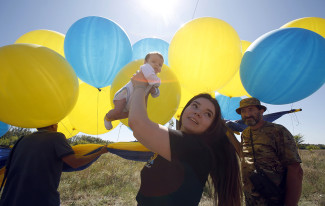
A women holds up an infant in the air on sunny day outdoors, surrounded by yellow and blue balloons

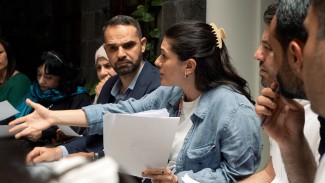
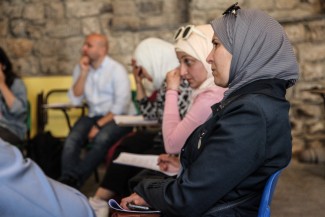
Fourteen members of Syrian civil society recently gathered for a five-day workshop on community facilitation and transitional justice organized by ICTJ and its partners in the Bridges of Truth project. The workshop marked a major step in the preparation for extensive community dialogues that will take place across Syria in the months ahead.

The outlet PassBlue recently interviewed ICTJ Executive Director Fernando Travesí-Sanz about the challenges and breakthroughs ICTJ has encountered while facilitating a victims-led path to transitional justice in post-Assad Syria. Travesí-Sanz compared the experience to the lessons learned from Colombia’s post-conflict transition, revealing the nuanced, fragile nature of both retroactive justice and long-term peacebuilding.

Throughout 2025, ICTJ’s experts offered thoughtful analysis on conflicts and major political developments in more than 10 countries as part of the World Report newsletter. Their insightful commentaries shed light on the obstacles that victims, civil society, and their partners must navigate as they pursue sustainable peace and justice. In this edition, we look back on the past year through the Expert’s Choice column.

On November 20 — on the 80th anniversary of the opening of the main Nuremberg trial, which prosecuted Nazi leadership for aggression and mass atrocities of World War II — details of the allegedly proposed new “peace” plan for Ukraine emerged. The initiative has surfaced one of the Kremlin’s recurrent demands: full amnesty for wartime atrocities — the very acts Nuremberg sought to punish and prevent.

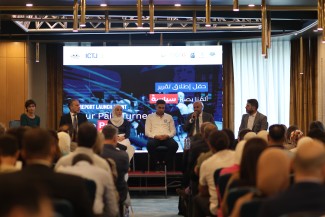
ICTJ and its partners in the Bridges of Truth project presented in Damascus the findings from their recent report on the first community dialogues held in Syria since the fall of the al-Assad regime in December 2024. On October 7, victims and family members, civil society actors, representatives from the country’s nascent transitional justice commissions, government officials, and international partners gathered to reflect on the lessons learned from the dialogues and the path forward for truth, justice, and accountability in Syria.

ICTJ and its partners in the Bridges of Truth project hosted an event in Damascus on October 7 to present findings from their recent report on the community dialogues held in April in Syria and to commemorate the project’s eighth anniversary.

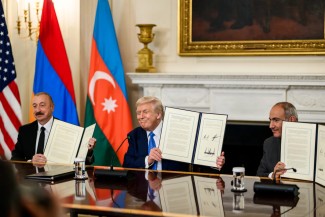
On August 8, Armenia and Azerbaijan signed the Joint Declaration on Future Relations. Hailed by some as a “historic peace deal,” it neither is a treaty nor ends the 37-year Nagorno-Karabakh conflict. Rather, it is a political framework that requires international support and attention.

The numerous atrocities committed by Russia in Ukraine have been part of the former's aggression since its initial invasion of the Crimea and Donbas regions in 2014, though they have skyrocketed in number and severity since the full-scale invasion in 2022. Among these crimes are enforced disappearances, which serve as the means by which the Kremlin more broadly intends to subjugate Ukrainians and eliminate any traces of the Ukrainian national identity.

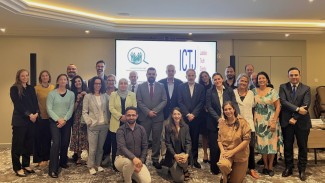
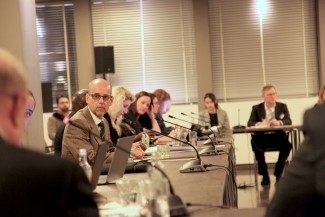
ICTJ, in collaboration with the Dutch Ministry of Foreign Affairs, recently convened the first international dialogue in Geneva in support of Syria’s two new justice commissions. From July 10 to 11, members of the National Commissions for Transitional Justice and for the Missing joined representatives of Syrian victim groups and experts and practitioners from around the world to discuss the present opportunities and challenges for peace and justice in Syria and how best to support the nascent institutions in fulfilling their mandates and advancing acknowledgment, truth, accountability, and repair.

Across Syria today, we continue to witness human rights violations and abuses that run counter to the very principles upon which the revolution was built. In particular, recent violence in the coast and Sweida has deepened the sense of fear and mistrust already felt by many communities. Meanwhile, Syria's new transitional justice commissions have been working hard to lay the foundations of their mandates. Now, at this critical juncture, they must show that they are ready to lead and first and foremost to serve victims.

At the end of April in Syria, dozens of local residents in several cities and towns sat down together for the first time to finally speak about their experiences during the 14-year conflict that tore society apart and resulted in countless human rights violations. These community dialogues, organized by ICTJ in partnership with the Bridges of Truth project, provided a safe space for participants to share their stories and hardships, discuss their needs, and express their hopes for justice and reconciliation.

On July 10 and 11, ICTJ convened a high-level dialogue in Geneva that brought members of Syria’s newly established transitional justice commissions together with international experts and representatives from Syrian civil society represented by the Bridges of Truth project and victims’ groups and multilateral institutions. The two-day event provided guidance to the commissioners as they develop and implement their mandates and supported Syrian-led efforts to build transparent and inclusive institutions.

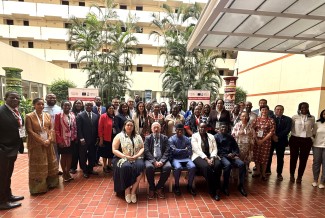
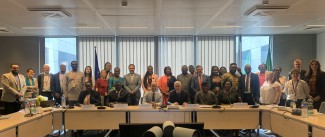
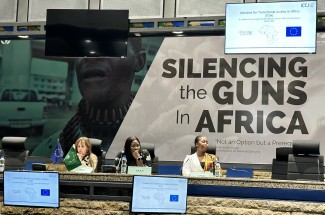
The African Union and the European Union successfully concluded the fifth AU-EU expert seminar on transitional justice, held from June 19 to 20, 2025, in Abuja, Nigeria. Hosted under the Initiative for Transitional Justice in Africa, the seminar brought together more than 50 experts, policymakers, researchers, and civil society representatives to discuss the critical role of reparations in fostering justice, reconciliation, and sustainable peace.

This report summarizes the key issues discussed at the fourth African Union-European Union experts’ seminar on transitional justice. Convened by ICTJ in Brussels in June 2024, the seminar brought together experts from the two regions to share experiences and to explore how transitiona...

Cover of report on the 2024 AU-EU Experts’ Seminar on Transitional Justice

ICTJ welcomes the formation of two new independent institutions in Syria: the National Commission for Transitional Justice and the National Commission for the Missing. Established by presidential decree, these commissions represent a historic step forward in acknowledging the demands of victims and their families and formally responding to the widespread violations committed in Syria over the last decades.

ICTJ has announced the digital release of its award-winning short animated documentary that explores the trauma and resilience of families of the disappeared in Syria. After an extensive tour of international film festivals in Asia, Europe, and North America, the acclaimed film recently returned home for its first screening in Syria. Now, it is available to audiences the world over on the ICTJ website and YouTube channel.

This award-winning short, animated documentary follows a young mother of two whose husband was detained and disappeared by security forces in Syria some years ago. The film takes the viewer on her journey as a refugee searching for safety in Berlin and depicts the daily struggles she en...

Since long before Russia’s full-scale invasion of Ukraine in 2022, Moscow has spread disinformation to justify its aggression, disguising their longstanding premises that Ukraine is, allegedly, not a sovereign nation, and its statehood is conditioned upon an alliance with Russia. Countering these narratives is not only valuable for Ukrainians, but also for buoying any democratic transformations in Russia and for establishing a more nuanced understanding of the history of Central and Eastern Europe.

ICTJ is outraged by the recent massacre in Syria, where over 1,000 civilians were brutally killed in yet another wave of violence. This appalling crime underscores the urgent and undeniable need to protect civilians and provide justice and accountability.

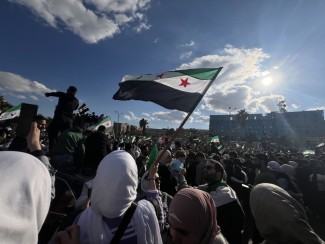
The fall of the Assad regime marks the beginning of a long-overdue transformation in Syria. For the first time in decades, space has opened to speak freely about justice, accountability, and reconciliation. It is a moment filled with uncertainty and pain, but also one of immense hope.

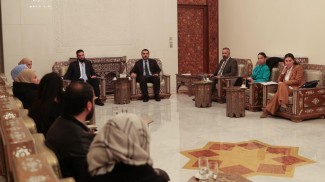
On February 1, 2025, ICTJ facilitated a meeting between family members of the missing and detainees and Syria’s transitional president, Ahmed Al-Sharaa, and the minister of foreign affairs, Asaad Al-Shaibani, at the Presidential Palace in Damascus. Attendees presented a number of specific urgent demands related to the missing and forcibly disappeared, while President Ahmed Al-Sharaa underscored the government’s commitment to the issue.

On December 2 to 6, 2024, the International Criminal Court’s (ICC) Assembly of States Parties—the court’s management oversight and legislative body—held its 23rd session in The Hague. As in previous years, ICTJ took an active part, and its experts joined many of the discussions sharing their knowledge and insight. ICTJ organized two side events, one focusing on Syrian victims and another on reparations for victims in Northern Uganda.

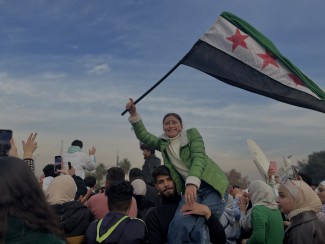
The fall of Bashar al-Assad’s regime after 53 years of authoritarian rule marks a significant moment in the pursuit of justice, peace, and human rights. While this transition opens the door to new possibilities, it also underscores the immense obstacles and responsibilities that lie ahead.

Drawing from data and testimonies of Syrians both inside the country and in the diaspora collected by civil society organizations, this report looks at the justice needs of Syrian victims of human rights violations in the context of ongoing debates on refugee returns. It critically ex...

Illustration depicting an elderly woman carrying an armchair on her back

Two and a half years after Russia’s full-scale invasion of Ukraine, victims continue to demand justice for the massive violations they have suffered, which have left many of them gravely harmed. The International Criminal Court opened an investigation into alleged crimes in March 2022. It now faces a critical challenge: how to ensure that Ukrainian victims can meaningfully participate in all stages of its procedures, despite the court’s location far from the conflict.

The field of transitional justice is increasingly recognizing the relevance of mental health and psychosocial support (MHPSS) in contexts of massive human rights violations. Despite growing advocacy and awareness at the global policy level, however, the field lacks a systematic approa...

an image of colorful painting featuring a young girl

On June 5 and 6, 2024, the African Union (AU) and the European Union (EU) hosted the fourth edition of the AU-EU Experts’ Seminar on Transitional Justice in Brussels, Belgium. The consortium implementing the Initiative for Transitional Justice in Africa, led by ICTJ, helped organize the event. The seminar explored how transitional processes can transform individual lives, societal relations, and dysfunctional state institutions.

On February 8, ICTJ held an event in The Hague on the missing and disappeared in Syria, in partnership with the Dutch Ministry of Foreign Affairs. The event brought together activists, journalists, artists, and policymakers to reflect on the critical humanitarian needs of victims and their families and the role of the newly established international body on the missing in Syria, which is mandated in part to address these needs.

Throughout 2023, ICTJ’s experts have offered their unique perspective on breaking news around the globe as part of the World Report. Their insightful commentaries have brought into focus the impact these events have on victims of human right violations as well as larger struggles for peace and justice. In this edition, we look back on the past year through the Expert’s Choice column.

On October 25, the African Union (AU) and European Union officially launched their joint Initiative for Transitional Justice in Africa (ITJA) in Addis Ababa. The project will take place over a three-year period and will promote national transitional justice processes in Africa, in line with the AU Transitional Justice Policy and its roadmap. The ITJA has several unique features that, if embraced and advanced by all actors, have the potential to trailblaze a new and inspiring path to peace, justice, and sustainable development on the African continent.

Five years ago, in August 2018, to mark his 100 days in office, Armenian Prime Minister Pashinyan addressed a large rally in Yerevan’s Republic Square to officially announce his government’s intentions to incorporate transitional justice mechanisms into Armenian post-revolution reform agenda. Since then, Armenia has been pursuing a range of transitional justice initiatives alongside other democratic reforms, and it has made some limited headway, despite setbacks and major challenges including renewed conflict with Azerbaijan.

More than 20 years after the end of the Yugoslav Wars of the 1990s, Kosovo is still contending with unresolved ethnic tensions. Formerly an autonomous region of Serbia within the former Yugoslavia, Kosovo declared independence in 2008. Ethnic tensions were a root cause of the violent conflicts, during which an estimated 140,000 died and numerous atrocities were committed. ICTJ recently sat down with ICTJ's Anna Myriam Roccatello and Kelli Muddell to learn more about ICTJ's work and the present challenges to truth and justice in the country.

The photography exhibition “All Our Tears” weaves together the stories of victims from the wars in the Western Balkan region in the 1990s. It consists of photographs taken by four photographers in various locations in Kosovo, North Macedonia, and Serbia, and was part of a three-year project funded by the European Union that brought together civil society organizations and victims’ groups in Kosovo, North Macedonia, and Serbia, along with the international organizations ICTJ and PAX to develop meaningful, victim-led peacebuilding and reconciliation initiatives in the region.

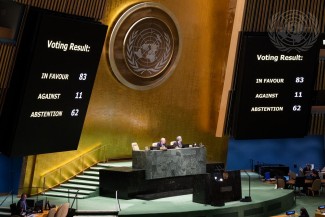
On June 29, 2023, the United Nations General Assembly adopted a resolution creating a new independent institution on the missing in the Syria Arab Republic. Eighty-three member states voted in favor, 11 voted against, and 62 abstained. ICTJ welcomes the resolution, which represents a momentary reprieve in Syria’s otherwise bleak justice landscape. This vote represents a critical step forward in supporting all those who seek answers about the fate and whereabouts of their loved ones and who suffer daily from the indignities and grave hardships that ensue when a loved one goes missing.

The photography exhibition “All Our Tears” weaves together the stories of victims from the wars in the Western Balkan region in the 1990s. It consists of 34 original photographs, taken by four photographers in various locations in Kosovo, North Macedonia, and Serbia. The photographs fea...

On May 12, the Council of Europe’s Committee of Ministers agreed to create a mechanism to receive claims for damages caused by the Russian crime of aggression in Ukraine. The new registry is intended to receive information on claims of damage, loss, or injury caused by Russia’s invasion of Ukraine since February 24, 2022 and assess their eligibility for future adjudication or compensation. Many of the register’s chief proponents are hailing its creation as a key step toward accountability for the many violations of international law that Russia has committed in or against Ukraine. However, the register alone will not be sufficient to address the multitude of harms caused by the war.

ICTJ releases a new briefing paper, “Reflections on Victim-Centered Accountability in Ukraine.” The paper examines the various actions that have been taken or are under consideration to investigate and prosecute war crimes and other human rights violations in Ukraine. It explores the myriad challenges they face and how tools from the field of transitional justice can be applied in tandem to deliver justice and reparation to victims and lay the foundation for a more inclusive and democratic Ukraine.

This briefing paper examines the various actions that Ukrainian officials and members of the international community have launched to investigate and prosecute war crimes and other human rights violations committed in Ukraine since Russia invaded the country in February 2022. It explo...

First of the briefing paper Reflections on Victim-Centered Accountability in Ukraine

In a fast-changing world, ICTJ regularly reexamines and adapts its methodology to develop innovative solutions to emerging problems, advance its mission, and achieve justice for victims of human rights violations. In that spirit, ICTJ recently launched an exciting new website and newsletter design. After over a year of research, planning, surveying stakeholders, designing, and testing, we unveiled a site that better aligns with what ICTJ and transitional justice are today.

ICTJ is more than two decades old. At the time it was established, many of those who contributed to transitions in Argentina, Chile, Guatemala, South Africa, and the former Yugoslavia saw the value of a specialized organization that could draw from diverse national experiences to prov...

The cover of a report with the text, "2022-2027, Strategic Plan," with an image of people embracing underneath.

Throughout 2022, ICTJ’s experts weighed in on breaking news in more than 10 countries, offering incisive analyses of the political dynamics behind the coverage and the implications for justice, peace, and the rights of victims. In this December edition of the World Report, we look back at the year that was through our Expert’s Choice commentaries, bringing you all of our team’s valuable insights together in one place.

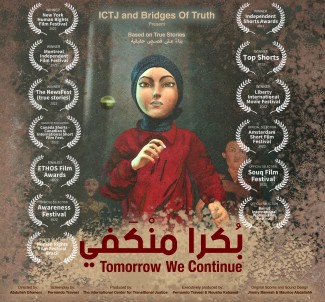
ICTJ and the Bridges of Truth project are launching Tomorrow We Continue, a new short animated documentary that follows a young mother of two whose husband was detained and disappeared by security forces in Syria some years ago. The film takes the viewer on her journey as a refugee searching for safety in Berlin and depicts the daily struggles she encounters once settled as she tries to earn a living and care for her children while continuing to search for her husband. Since the uprising in Syria began in 2011, more than 100,000 people have been disappeared or arbitrarily detained. The families they leave behind may move to safer places as refugees, but the search for their loved ones persists wherever they go. This film is one of their stories.

This short animated documentary follows a young mother of two whose husband was detained and disappeared by security forces in Syria some years ago. The film takes the viewer on her journey as a refugee searching for safety in Berlin and depicts the daily struggles she encounters once s...

On October 31, Armenian Prime Minister Nikol Pashinyan met with Russian President Vladimir Putin and Azerbaijani President Ilham Aliyev in Sochi to discuss steps to normalize relations between Yerevan and Baku and a longer-term peace deal that would finally end the decades-long, on-and-off conflict over Nagorno-Karabakh. This willingness on both sides to come to the negotiating table is without question welcome news. However, the two parties seem to want to talk about peace on different terms and without addressing core human rights issues in their respective countries in connection with the conflict.

On September 15, ICTJ organized a side event on the missing and disappeared in Syria, sponsored by the governments of Luxembourg and Finland, during the 77th session of the United Nations General Assembly. The event was a timely one, as it addressed a recent proposal for the creation of a new...

The role of victim participation in international criminal proceedings, whether in international, hybrid, or national courts, has long been a matter of public deliberation among criminal justice practitioners and human rights activists. In the aftermath of mass atrocities and repression, the...

As part of its ongoing efforts to support Syrian civil society organizations seeking to end enforced disappearances in Syria, ICTJ organized a visit to the United States for members of two prominent family associations: Families for Freedom and the Caesar Families Association. The trip, which was planned in coordination with longtime partner Dawlaty, comes at a time when Syrian civil society and victims’ groups have been intensifying their calls for an international mechanism to uncover the fate of those who have gone missing in Syria since the start of the uprising in March 2011.