104 results

Throughout 2023, ICTJ’s experts have offered their unique perspective on breaking news around the globe as part of the World Report. Their insightful commentaries have brought into focus the impact these events have on victims of human right violations as well as larger struggles for peace and justice. In this edition, we look back on the past year through the Expert’s Choice column.

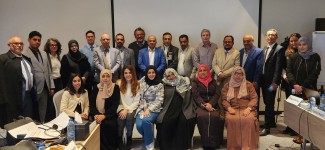
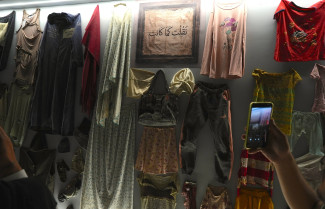
In 2016, the Yemeni National Commission to Investigate Alleged Violations to Human Rights began documenting violations committed since the 2011 uprising and during the subsequent brutal civil war, which continues today. To date, the commission has documented more than 23,000 human rights abuses and referred over 2,000 cases to Yemen’s Public Prosecutor for prosecution. However, no verdict has been issued in any of these cases. To help the commissioners and members of Yemen’s judiciary advance accountability, ICTJ organized a workshop for them on transitional justice mechanisms. However, to deliver a justice that meets all the reparative needs of victims, these efforts must be an integral part of a broader, multifaceted transitional justice process.
The role of victim participation in international criminal proceedings, whether in international, hybrid, or national courts, has long been a matter of public deliberation among criminal justice practitioners and human rights activists. In the aftermath of mass atrocities and repression, the...

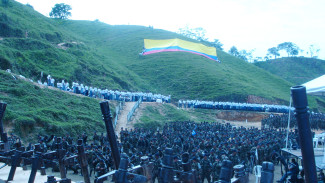
This study, carried out in partnership with Aulas de Paz and Universidad Santo Tomás, explores experiences of acknowledgment of responsibility under Colombia’s Justice and Peace Law. Drawing on interviews with victims, former combatants, and judicial officials, it identifies key lesso...

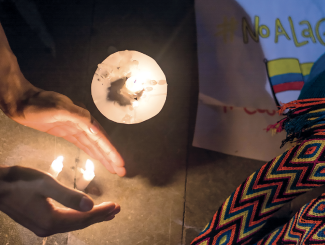
A person lights a candle during an anti-war protest in Barranquilla, Colombia.

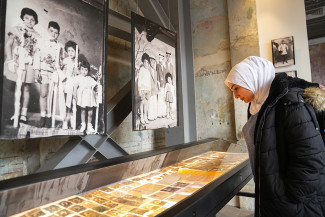
The photography exhibition “All Our Tears” weaves together the stories of victims from the wars in the Western Balkan region in the 1990s. It consists of photographs taken by four photographers in various locations in Kosovo, North Macedonia, and Serbia, and was part of a three-year project funded by the European Union that brought together civil society organizations and victims’ groups in Kosovo, North Macedonia, and Serbia, along with the international organizations ICTJ and PAX to develop meaningful, victim-led peacebuilding and reconciliation initiatives in the region.

This April, Sudan marked a double anniversary: one of the 2019 revolution that toppled President Omar al Bashir’s decades-long repressive regime, the other of the 2023 outbreak of the ongoing civil war that has devastated the country. These contrasting occasions bring with them great hopes and deep pain. They also raise pressing questions: How long will Sudan have to suffer while the world’s attention seems turned the other way? How long will the voices of Sudanese who yearn for peace and justice continue to be sidelined?

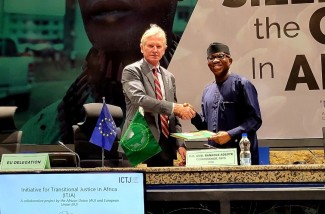
Abuja, June 19, 2025—The African Union (AU) and the European Union (EU), in collaboration with the Consortium implementing the Initiative for Transitional Justice in Africa (ITJA), led by the International Center for Transitional Justice (ICTJ) and co-implemented by the Africa Transitional Justice...

The African Union and the European Union have officially launched a three-year project to support AU member states as they incorporate the African Union Transitional Justice Policy and undertake transitional justice processes at the national level. The project, named the Initiative for Transitional Justice in Africa, will be implemented by a consortium of three organizations led by the International Center for Transitional Justice, the African Transitional Justice Legacy Fund, and the Centre for the Study of Violence and Reconciliation.

Five years ago, in August 2018, to mark his 100 days in office, Armenian Prime Minister Pashinyan addressed a large rally in Yerevan’s Republic Square to officially announce his government’s intentions to incorporate transitional justice mechanisms into Armenian post-revolution reform agenda. Since then, Armenia has been pursuing a range of transitional justice initiatives alongside other democratic reforms, and it has made some limited headway, despite setbacks and major challenges including renewed conflict with Azerbaijan.

Eight years into a brutal war, the people of Yemen are still suffering through the worst humanitarian crisis on earth. The war has resulted in over 370,000 deaths, more than half of which are linked to indirect causes such as hunger and preventable diseases. Around 4 million people have been...

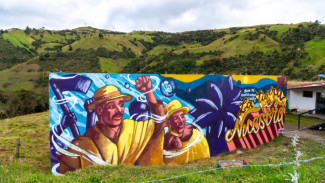
For many years now, the International Center for Transitional Justice and other organizations have supported young activists and artists as they harness the power of art, culture, and new media to advance truth, justice, reform, and redress, not only where they live, but across borders and in collaboration with others. This innovative and inspiring work offers lessons about how to increase civic engagement and help societies know the truth about their country’s past and actively shape the national narrative.

To commemorate the 20th anniversary of the Justice and Peace Law—which created Colombia's first transitional justice system—media outlet Verdad Abierta, the Friedrich Ebert Stiftung, and ICTJ partnered to produce an investigative four-part series in Spanish that critically assesses its legacy. ICTJ has now translated the first two installments into English.

This year, Colombia commemorates the 20th anniversary of Law 975, which established the country’s first transitional justice process, called Justicia y Paz (or Justice and Peace). With this anniversary top on mind, and as the current government engages with eight of the remaining armed groups in pursuit of its “Total Peace” strategy, ICTJ recently teamed up with podcast producers Sillón Estudios to create a four-part series that delves into the peace process with the AUC and considers key lessons learned.

International Center for Transitional Justice The Final Peace Agreement signed in 2016 between the Revolutionary Armed Forces of Colombia (FARC-EP) guerrillas and the Colombian government created an ambitious and innovative transitional justice system called the Comprehensive System of Truth...

Colombia’s new president Gustavo Petro was elected to office on a progressive campaign to strengthen democracy, implement social reforms, and bring “total peace” to the country. His approach to peace encompasses political negotiations with all remaining insurgent groups and simultaneous dialogues with criminal organizations geared toward their voluntary submission to justice in exchange for punitive leniency. But eight months into his administration, Petro’s efforts to deliver on his campaign promise are facing numerous challenges.

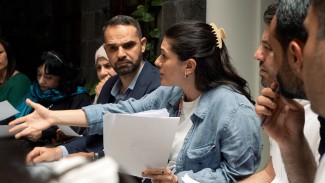
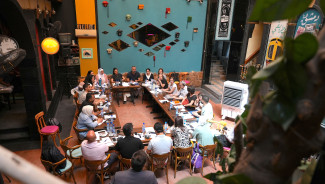
At the end of April in Syria, dozens of local residents in several cities and towns sat down together for the first time to finally speak about their experiences during the 14-year conflict that tore society apart and resulted in countless human rights violations. These community dialogues, organized by ICTJ in partnership with the Bridges of Truth project, provided a safe space for participants to share their stories and hardships, discuss their needs, and express their hopes for justice and reconciliation.

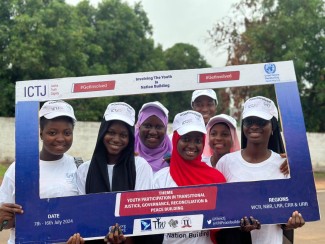
Almost eight years since The Gambia's former President Yahya Jammeh left power, the country is still seeking justice for the human rights abuses committed during his 22-year dictatorship. In May 2023, the Ministry of Justice released a plan to implement the recommendations of the country's Truth, Reconciliation and Reparations Commission. While the plan promises to deliver justice and repair harms, for it to have its intended impact, it requires broad public participation in the process, especially that of young people. With that in mind, ICTJ has partnered with the UN Peacebuilding Fund on a project to encourage Gambian youth to take a leading role in this process and the country's future.

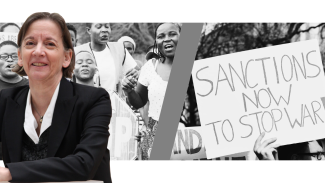
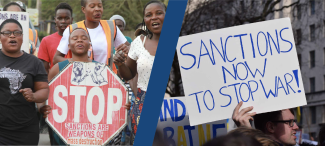
In recent years, states have increasingly imposed sanctions in relation to the commission of human rights violations, which has expanded their potential to advance transitional justice goals. In this context, ICTJ recently published a new report offering an analysis of international sanctions from a transitional justice perspective. In this interview, the report's author, ICTJ Senior Expert Elena Naughton, discusses how sanctions may advance or hinder efforts to deliver accountability, acknowledge and redress victims, and prevent recurrence in response to massive human rights abuses.

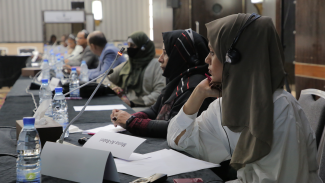
Fourteen members of Syrian civil society recently gathered for a five-day workshop on community facilitation and transitional justice organized by ICTJ and its partners in the Bridges of Truth project. The workshop marked a major step in the preparation for extensive community dialogues that will take place across Syria in the months ahead.

On September 15, ICTJ organized a side event on the missing and disappeared in Syria, sponsored by the governments of Luxembourg and Finland, during the 77th session of the United Nations General Assembly. The event was a timely one, as it addressed a recent proposal for the creation of a new...

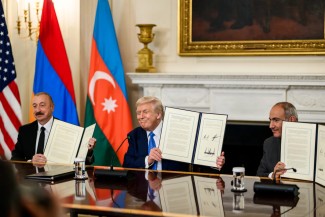
On August 8, Armenia and Azerbaijan signed the Joint Declaration on Future Relations. Hailed by some as a “historic peace deal,” it neither is a treaty nor ends the 37-year Nagorno-Karabakh conflict. Rather, it is a political framework that requires international support and attention.

Colombia currently faces a transformed, fragmented form of violence centered on territorial and social control rather than the traditional insurgency. This briefing paper argues that state security strategies remain misaligned, relying on outdated military approaches and metrics. To a...

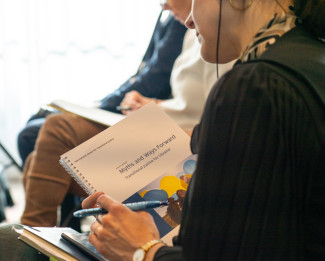
Image of first page of the briefing paper "From Combat to Territorial Control"

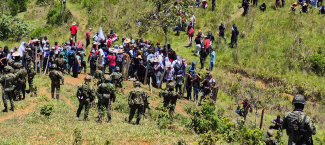
Colombia currently faces a transformed, fragmented form of violence centered on territorial and social control rather than the traditional insurgency. This report argues that state security strategies remain misaligned, relying on outdated military approaches and metrics. To avoid lon...

An aerial view of a group of soldiers interacting with a large civilian crowd in a rural setting

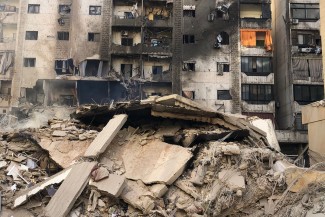
The ongoing war in the Middle East is not an isolated event; it represents a 75-year cycle of violence marked by historical grievances, geopolitical struggles, and humanitarian crises. In the latest episode of this tragic story, Lebanon has become the newest battlefield. So far, the conflict has caused widespread destruction, killed or injured thousands, and displaced over a million in Lebanon. The country now faces many daunting questions about reconstruction, reparations for victims, and the type of society that will emerge in the war’s aftermath.

To commemorate the 20th anniversary of the Justice and Peace Law—which created Colombia's first transitional justice system—media outlet Verdad Abierta, the Friedrich Ebert Stiftung, and ICTJ partnered to produce an investigative four-part series in Spanish that critically assesses its legacy. Now translated into English, this first installment provides an overview of the process.

This report assesses the gender sensitivity of the African Union Transitional Justice Policy (AUTJP). Drawing on continental practice and scholarship, it identifies opportunities for AU member states, civil society, and donors to strengthen the policy’s implementation and its responsi...

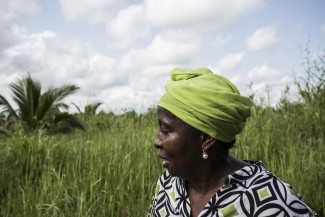
A woman stands in the profile position in a field of green plants on a sunny day with a clear blue sky

Enforced disappearance and arbitrary detention devastate victims and all those who love them. This guide takes an unsparing look at the harsh realities that Syrian victims of these crimes face and offers guidance on what they and others can do to help. It is the product of the Bridges...

A drawing of a woman holding a young child. In the background are numerous eyes of different colors watching them.

In 2022, the Total Peace law was passed in Colombia, through which the government seeks to negotiate and reach agreements with armed organizations that still exist in the country. On June 19, 2024, the current director of ICTJ Colombia, Maria Camila Moreno, was appointed to be a member of the negotiating team that will help develop the peace dialogue table with the armed group Segunda Marquetalia.

On November 20 — on the 80th anniversary of the opening of the main Nuremberg trial, which prosecuted Nazi leadership for aggression and mass atrocities of World War II — details of the allegedly proposed new “peace” plan for Ukraine emerged. The initiative has surfaced one of the Kremlin’s recurrent demands: full amnesty for wartime atrocities — the very acts Nuremberg sought to punish and prevent.

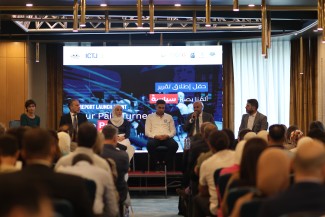
ICTJ and its partners in the Bridges of Truth project presented in Damascus the findings from their recent report on the first community dialogues held in Syria since the fall of the al-Assad regime in December 2024. On October 7, victims and family members, civil society actors, representatives from the country’s nascent transitional justice commissions, government officials, and international partners gathered to reflect on the lessons learned from the dialogues and the path forward for truth, justice, and accountability in Syria.

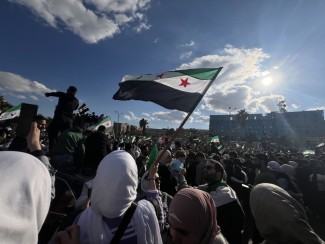
The fall of the Assad regime marks the beginning of a long-overdue transformation in Syria. For the first time in decades, space has opened to speak freely about justice, accountability, and reconciliation. It is a moment filled with uncertainty and pain, but also one of immense hope.

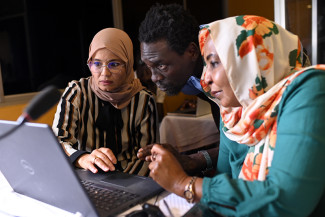
ICTJ recently convened human rights defenders, journalists, and lawyers from Libya, Sudan, Syria, Tunisia, and Yemen for a workshop on digital, open-source investigations. Held on November 3-8 in Kampala, Uganda, the course trained participants on open-source tools with a view to strengthening their work investigating, documenting, and monitoring human rights violations.

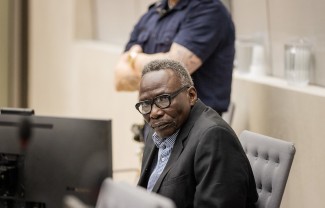
ICTJ accompanied more than 10 Sudanese victim stakeholders to the International Criminal Court (ICC) in The Hague to attend the closing statements in the case of The Prosecutor v. Ali Muhammad Ali Abd-Al-Rahman ("Ali Kushayb"). The statements took place on December 11 to 13. ICTJ supported the ICC in the selection of the stakeholders, who were chosen for their strong ties with affected communities.

ICTJ and its partners in the Bridges of Truth project hosted an event in Damascus on October 7 to present findings from their recent report on the community dialogues held in April in Syria and to commemorate the project’s eighth anniversary.

ICTJ has announced the digital release of its award-winning short animated documentary that explores the trauma and resilience of families of the disappeared in Syria. After an extensive tour of international film festivals in Asia, Europe, and North America, the acclaimed film recently returned home for its first screening in Syria. Now, it is available to audiences the world over on the ICTJ website and YouTube channel.

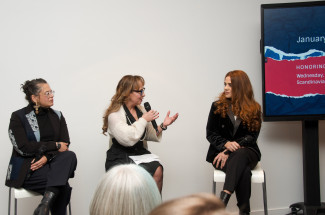
On January 28, 2026, ICTJ held its annual January for Justice Leaders benefit dinner in New York City, an event celebrating leaders advancing justice around the world. This edition also marked the beginning of ICTJ’s 25th anniversary year and served as an opportunity to look back on a quarter century spent standing alongside victims, civil society, and institutions in the pursuit of truth, accountability, and lasting peace after mass atrocities.

On July 10 and 11, ICTJ convened a high-level dialogue in Geneva that brought members of Syria’s newly established transitional justice commissions together with international experts and representatives from Syrian civil society represented by the Bridges of Truth project and victims’ groups and multilateral institutions. The two-day event provided guidance to the commissioners as they develop and implement their mandates and supported Syrian-led efforts to build transparent and inclusive institutions.

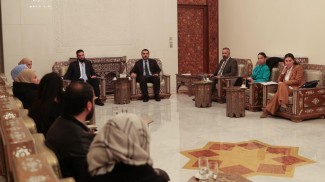
On February 1, 2025, ICTJ facilitated a meeting between family members of the missing and detainees and Syria’s transitional president, Ahmed Al-Sharaa, and the minister of foreign affairs, Asaad Al-Shaibani, at the Presidential Palace in Damascus. Attendees presented a number of specific urgent demands related to the missing and forcibly disappeared, while President Ahmed Al-Sharaa underscored the government’s commitment to the issue.

Even as the parties to the war in Yemen fail to extend the UN-brokered ceasefire, field monitors of the National Commission to Investigate Alleged Violations to Human Rights (NCIAVHR) continue to document and investigate human rights violations despite enormous challenges and serious risks to their...

ICTJ deeply mourns jurist and professor Theo van Boven, an eminence and true innovator in the field of international law, as well as a fearless defender of victims globally, who sadly passed away on May 9th. We extend our condolences to his family, friends, and colleagues.

As part of its ongoing efforts to support Syrian civil society organizations seeking to end enforced disappearances in Syria, ICTJ organized a visit to the United States for members of two prominent family associations: Families for Freedom and the Caesar Families Association. The trip, which was planned in coordination with longtime partner Dawlaty, comes at a time when Syrian civil society and victims’ groups have been intensifying their calls for an international mechanism to uncover the fate of those who have gone missing in Syria since the start of the uprising in March 2011.

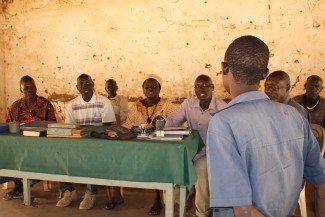
In countries where state institutions have limited reach, customary and informal justice is often the most common way in which people resolve disputes and seek justice. Given its prominence, it is considered to be an important element of a people-centered approach to building peaceful, just, and inclusive societies. An understanding of the relationship between customary justice and transitional justice, however, remains underdeveloped. A new ICTJ report provides valuable empirical, qualitative research on the topic, in the context of South Sudan.

A new ICTJ report urges the revitalization of Ukraine’s holistic transitional justice policymaking. Debunking the most common myths about transitional justice in Ukraine, the report presents the key legal, policy, and victim-centered arguments in favor of advancing a comprehensive transitional justice framework.

South Sudanese refugees and displaced persons currently comprise 40 percent of the country’s total population. Yet, these groups have been largely excluded from ongoing policy discussions related to South Sudan's transitional justice process in South Sudan. A new ICTJ report aims to amplify the perspectives and expectations of these groups and ensure they are included in the process's design and implementation.

As a tool of foreign policy, sanctions have historically been deployed by one or more states to coerce a change of behavior or policy. In recent years, however, states have increasingly imposed sanctions on actors responsible for human rights violations, which has expanded their potential to advance transitional justice goals. Now, ICTJ is releasing a new report that considers this potential as well as the obstacles to justice sanctions may engender.

The fall of Bashar al-Assad’s regime after 53 years of authoritarian rule marks a significant moment in the pursuit of justice, peace, and human rights. While this transition opens the door to new possibilities, it also underscores the immense obstacles and responsibilities that lie ahead.

ICTJ is outraged by the recent massacre in Syria, where over 1,000 civilians were brutally killed in yet another wave of violence. This appalling crime underscores the urgent and undeniable need to protect civilians and provide justice and accountability.

ICTJ welcomes the formation of two new independent institutions in Syria: the National Commission for Transitional Justice and the National Commission for the Missing. Established by presidential decree, these commissions represent a historic step forward in acknowledging the demands of victims and their families and formally responding to the widespread violations committed in Syria over the last decades.

ICTJ is pleased to announce the addition of three new members to its Board of Directors: Ms. Nina Lahoud, Ms. Rajakumari Jandhyala, and Mr. Max Gleischman. “These three individuals bring a wealth of expertise in law, economics, diplomacy, and strategic communication to ICTJ. Their diverse perspectives and proven leadership will help steer ICTJ as it continues to support victims, strengthen institutions, and foster inclusive societies in the aftermath of conflict and repression,” said Chairperson Robert Cusumano.

On December 2 to 6, 2024, the International Criminal Court’s (ICC) Assembly of States Parties—the court’s management oversight and legislative body—held its 23rd session in The Hague. As in previous years, ICTJ took an active part, and its experts joined many of the discussions sharing their knowledge and insight. ICTJ organized two side events, one focusing on Syrian victims and another on reparations for victims in Northern Uganda.