629 results

Alonso Ojeda Awad and Medardo Correa joined Colombia’s notorious leftist guerrilla group the National Liberation Army (ELN) in their youth. After fighting with the group for several years, they and a handful of other ELN members demobilized voluntarily in the 1980’s. But it was not until 2019 that they were able to sit down with former members of paramilitary groups to discuss acknowledgment and responsibility for past crimes, reparation, and the importance of non-recurrence.

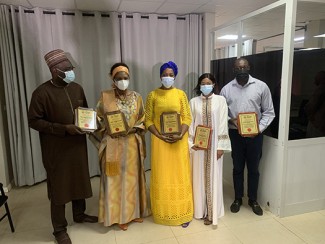
On July 13, 2021, the Gambia’s Truth, Reconciliation and Reparations Commission (TRRC) presented an award to ICTJ for its sustained support of the commission and its commitment to the country’s transitional justice process. The award comes as the TRRC concludes its work and prepares to submit its final report to the country’s president by September 30, 2021.

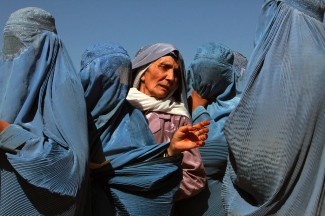
It only takes a quick skim of the daily news to see how the world has yet again failed Afghan civilians. Afghanistan has not had many good years in the past four decades of war, but the past 15 months have been decidedly fraught. The current chaos and spiking violence are proof that, despite what the US government has proclaimed, the “forever war” rages on. Peace and meaningful, victim-centered justice remain elusive.

On June 25, President of the Philippines Rodrigo Duterte publicly proposed arming civilian supporters in his war on drugs. His statement comes barely a week after the International Criminal Court’s (ICC) outgoing prosecutor, Fatou Bensouda, announced her request to open an investigation into crimes against humanity related the Philippines’ war on drugs. This step has been long-awaited by victims of the drug war. Nonetheless, the ICC case should be part of a larger, more strategic fight for justice in which the needs, safety, and future of the predominantly poor families victimized by the drug war are central and just as important as naming, shaming, and prosecuting the perpetrators and abettors of these crimes.

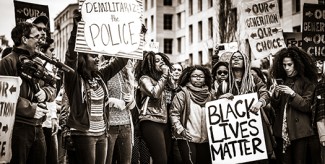
“No peace without justice” is a chant that filled the streets of the United States last year following the murder George Floyd by police in May 2020. This same chant has animated protest movements and social and political upheaval in many countries around the world. We at ICTJ know from our experience that these calls for justice are for something far more encompassing than criminal accountability alone.

This study analyzes how transitional justice in Sierra Leone has contributed to prevention by responding to the grievances of those harmed by violations, reducing exclusion, addressing through institutional reforms the causes of past violence, and catalyzing long-term change. While tr...

This report examines the contribution of transitional justice to prevention in the Philippines, as well as the limits of this contribution due to the failure to comprehensively address and learn from the past and undertake structural changes. While reparations, truth telling, and inst...

This study examines the preventive effect of transitional justice in Peru in the aftermath of internal conflict and authoritarianism, focusing on the violence’s root causes and the differentiated impact on victims and affected communities. It contends that while transitional justice h...

This study examines how transitional justice measures in Morocco have helped prevent state violence repression and social and economic exclusion. These measures included the Equity and Reconciliation Commission, which diagnosed some historical wrongdoings and called for reform to prev...

This report examines the preventive impact of transitional justice mechanisms in Colombia before the 2016 peace agreement. It finds that these measures have contributed to prevention by strengthening institutional responses to rights violations, shaping the public agenda, developing a...

While Armenia may rightfully seek acknowledgment from its neighbors of the genocide and other egregious violations, for its part, it must have the courage to reckon with its own recent past in the 30 years since achieving statehood, which includes war crimes, systematic corruption, and large-scale human rights abuses against its own citizens. Failing to do so ultimately threatens the young republic’s democracy.

This report summarizes the findings of an ICTJ research project on the contribution of transitional justice to prevention. Drawing from five country case studies, it contends that addressing the past can help to prevent the recurrence not only of human rights violations but also viole...

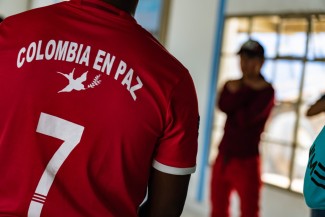
A young person with back facing the viewer is wearing a T-shirt that reads “Colombia in Peace"

After several years hiatus, ICTJ has recently resumed work in Afghanistan. Last month, ICTJ’s communication intern, Edward Mercado-Gumbs, sat down with expert and cohead of ICTJ’s program in Afghanistan Reem El Gantri to discuss ICTJ’s latest engagement in the country, as well as the prospects for justice and peace.

This year marks ICTJ’s 20th anniversary. For the past two decades, the organization has engaged in more than 50 countries, providing technical assistance and other critical support to victims, civil society, governments, and other stakeholders. Since its beginnings, ICTJ has served as a meeting point for transitional justice experts and practitioners and a hub of knowledge, research, and analysis. As a think tank that does, it has been at the forefront of the field’s evolution.

This briefing paper examines how transitional justice approaches can guide the discussion around dismantling systemic racism in the United States to focus on root causes of violence and racial injustice. Drawing from relevant experiences internationally and within the United States, i...

A significant portion of Colombian society has been indifferent to the pain of those who lived through the war in the flesh. Some have even denied the existence of an internal armed conflict. This is why it is necessary for us to recount our early and recent history. A new, more comprehensive and nuanced narrative must emerge from the testimonies of victims, responsible parties, and even spectators of this unending war.

With a special court that has yet to open a trial and a truth commission that is not up and running, international attention on victims in the Central African Republic is waning. Since 2015, the unfulfilled promises of justice made to these victims have failed to address their daily realities and needs for immediate moral, physical, and material reparations, writes Rim El Gantri, one of the authors of a recent study by ICTJ and Cordaid.

On March 31, 2021, the Appeals Chamber of the International Criminal Court upheld the Trial Chamber I’s acquittal of former Ivorian President Laurent Gbagbo and Charles Blé Goudé of all charges relating to crimes against humanity they allegedly committed during Côte d’Ivoire’s 2010-2011 post-election crisis. While the acquittal may be frustrating to many pursuing justice and accountability in Côte d’Ivoire, a silver lining is that it could mean tangible benefits for victims.

New York, March 10, 2021—“We want to turn the page, but not at the cost of justice”—that was a message repeated by victims of human rights abuses interviewed in a new report released today on transitional justice in the Central African Republic (CAR). Produced by the International Center for Transitional Justice and Cordaid, ‘A Drop of Water on a Hot Stone’: Justice for Victims in the Central African Republic presents findings from a study exploring victim-centered approaches to justice in CAR and their feasibility in a context of profound fragility and extreme poverty.

Providing justice to victims of human rights abuses in fragile contexts such as the Central African Republic (CAR) is challenging for reasons related not only to the state’s stability, capacity, and political will, but also socioeconomic inequality in the country. This research report...

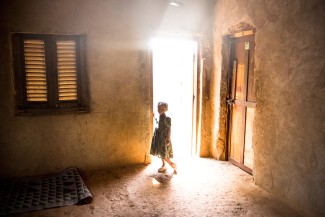
A young girl stands in the doorway to her house

Ten years have passed since Tunisians took the streets to demand “Employment, Freedom, and National Dignity.” The revolution’s loud, courageous voice against corruption, extreme inequality, and repression echoed around the globe and inspired the “Arab Spring.” Today, Tunisians are still proud of their revolution. However, they continue to strive for goals, yet unattained, that the political class does not even seem to understand. It was thus not surprising to see large protests on the 10th anniversary, demanding concrete action and new public policies to advance social justice and better integrate marginalized regions and populations.


2020 was a year of unforeseen hardships throughout the world. We may wish to write off last year as a loss and move forward. However, looking back on it as we do in this 2020 Year in Review, in which we highlight our most read content, we can find and take heart in important victories and apply lessons learned in 2021 and beyond.

On February 4, 2021, the International Criminal Court issued its judgment in the case of the Prosecutor v Dominic Ongwen. The ICC found Ongwen guilty of 61 counts of crimes against humanity and war crimes committed in Northern Uganda between July 1, 2002, and December 31, 2005. The verdict recognizes the enduring impact of the crimes on the victims, their families, and Ugandan society more generally.

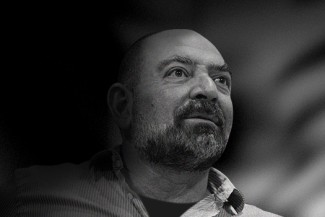
On February 4, 2021, the prominent activist, intellectual, writer, and filmmaker Lokman Slim joined the long list of victims of violence and impunity in Lebanon. The courageous human rights and political activist was found shot to death in his car in southern Lebanon.

New York, January 25, 2021—"You cannot deliver 500 kilograms of transitional justice,” explains a high-level UN official in a new ICTJ report released today that explores the theoretical and practical challenges of measuring the results of transitional justice processes. These processes are complex and politically contested and are thus notoriously difficult to evaluate. The report offers key insights related to and tools for evaluating and monitoring transitional justice processes and assessing their impact.

Because transitional justice processes are complex, politically contested, and not necessarily linear, they present unique theoretical and practical challenges for measuring their results. This report seeks to improve monitoring and evaluation practices and support evidence-based proc...

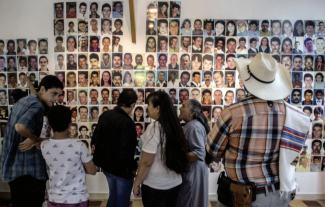
Children, women, and men look at a wall covered in faces of people.

In Venezuela, there is now an absence of representative democracy and a vacuum of public trust in politicians. However, this situation presents an opportunity for other actors and other approaches, so far disparaged by hardliners on both sides. Civil society organizations, which have earned credibility through their dedicated work addressing the humanitarian crisis and defending human rights, can seize this opportunity.

The democratic transition in Ethiopia is taking a worrisome turn. The sweeping reforms introduced by Prime Minister Abiy Ahmed in 2018 after decades of repressive rule and three years of deadly protests raised hopes for a more just and free society, one in which power is distributed equally among the country’s many ethnic groups. Worryingly, the failure to reach an inclusive political agreement on the way forward has triggered intercommunal violence and conflicts that have left hundreds of people dead and more than 2.7 million displaced throughout the country.

In what UN Women describes as the “shadow pandemic,” rates of violence against women have soared since the public health and economic crises brought about by COVID-19. With stay-at-home orders in place in countries around the world, women are more susceptible than ever to domestic violence. In countries affected by conflict or repressive rule, all forms of sexual and gender-based violence are on the rise. The ICTJ Gender Modules offer a timely tool to raise awareness about these issues and help develop gender-sensitive responses to them.

Lebanon has long been afflicted by a combination of political deadlock and a lack of accountability that has resulted in ongoing human rights violations and overall systemic rot. Comprehensive reforms, along with an inclusive truth-seeking process, broad public dialogue, and other way...

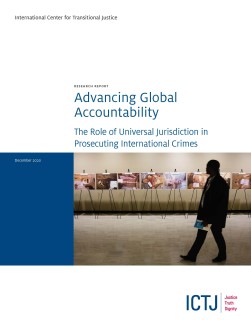
Invoking the principle of universal jurisdiction opens the door to the possibility of some accountability in circumstances where justice is not possible in countries where the crimes took place. This study considers the challenges facing the exercise of universal jurisdiction and asse...

Côte d’Ivoire descended into chaos following the October 2010 elections. One of the enduring lessons from this tragic experience could be that elections should never give a reason to set one’s country on fire. Like it or not, however, presidential elections in Côte d’Ivoire have become a malaise that grips the country every five years. And while the 2015 presidential elections were carried out peacefully, the recent October 2020 elections unfortunately were not. The tensions and violence that accompanied it, though far less devastating, brought back macabre memories of the 2010 post-election carnage that left 3,000 people dead and forced more an a million to flee their homes.

Mexico is overwhelmed by criminal violence and human rights violations in ways that ordinary rule of law mechanisms cannot address. While not undergoing a political transition, Mexico could benefit from transitional justice experiences when designing policies for pursuing accountabili...

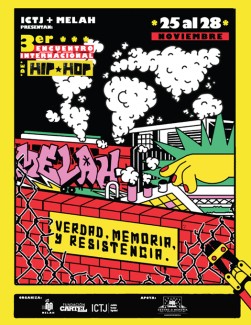
Bogotá, November 20, 2020—ICTJ and the Movement of Latin American Hip Hop Expressions have joined forces to cohost the third International Hip Hop Encounter, which will take place virtually this week from November 25 to November 28. The four-day online event will bring together artists and musicians from across Latin America and Africa along with activists, social leaders, and civil society representatives. The festival’s theme is the role of hip hop music and culture in uncovering truth, preserving memory, and resisting violence and oppression.

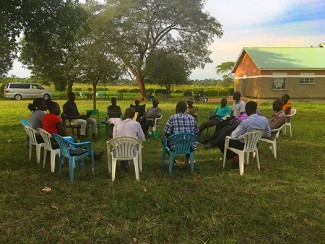
Over the last 15 years, the Ugandan government has implemented a series of recovery and reconstruction programs in Northern Uganda to address the social and economic devastation caused by the two-decade armed conflict in the region and set it on the path to sustainable peace. While these development programs alone cannot fulfill the state’s obligation to provide reparations to victims of human rights violations, if designed well, they can form a foundation upon which future reparations initiatives can be built.

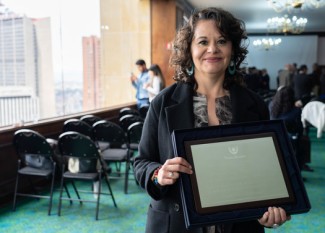
The purpose of Resolution 1325 is to highlight the particular way in which women and girls suffer in situations of conflict, as well as the critical role they play in peacebuilding. To commemorate the 20-year anniversary of the resolution, ICTJ would like celebrate the life and work of one its own women peacebuilders: María Camila Moreno Múnera, head of ICTJ’s Colombia office. She exemplifies what a woman leader can achieve in advancing truth, justice, reparation, and peace.

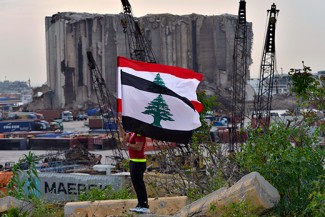
In response to the recent tragic explosion in Beirut on August 4, 2020, ICTJ and 14 prominent nongovernmental organizations recently issued a joint statement, demanding immediate action to promote accountability and a new non-sectarian political system in Lebanon. The likely preventable explosion represents another appalling consequence of a dysfunctional sectarian political system that has been in place since the end of the country’s 15-yearlong civil war in 1990 and that has afforded impunity to perpetrators of human rights abuses for decades and entrenched a culture of cronyism and corruption in the country.

The political crisis in Venezuela has reached a breaking point. The upcoming parliamentary elections scheduled for December 6 threaten to deprive the opposition of its institutional foothold, on which the legitimacy of its demand to establish an interim government rests. Moreover, observers both inside and outside Venezuela have repeatedly warned that the conditions are unsuitable for fair and impartial elections. A political solution now depends on the government backpedaling from its recent refusal to postpone the elections and allowing the European Union to observe them. It also requires the opposition to take a clear stance beyond calling for the removal of the president.
On September 14, the former Revolutionary Armed Forces of Colombia (FARC) publicly apologized to the victims of the kidnappings they perpetrated during the armed conflict. This unprecedented public declaration from a non-state armed group merits reflection from both the perspective of the transitional justice field as a whole and its implications for Colombia.

New York—ICTJ closed its office in Côte d’Ivoire on July 1 after eight years of operation due to several factors including a lack of political will in the government and difficulty securing funding. Although a sad moment for the organization, ICTJ is proud of its achievements in the country and remains confident that its local many partners will continue to advance justice.

Following the recent closure of ICTJ's office in Côte d’Ivoire, we caught up with Head of the Office Mohamed Suma and Senior Expert Cristián Correa to reflect on ICTJ’s work in the country and with victims, women, and youth, as well as the reasons why ICTJ has chosen to scale down its activities.

As UN member states convene virtually this week for the annual General Assembly, they will likely focus on a narrow list of agenda items, topped by issues related to the deadly coronavirus pandemic and a global economic downturn. For this reason, ICTJ would like to recall the vital importance of justice for global peace, security, health, and development by sharing findings from an analysis of the open debate on transitional justice that the UN Security Council held on February 13, 2020, as part of its peacebuilding and sustaining peace agenda.

On August 4th, former President Alvaro Uribe surprised the country with a tweet announcing that he would be placed under house arrest for suspected witness tampering and obstruction of justice by the Special Instruction Chamber of the Supreme Court of Justice as part of an investigation that has been underway since 2018. According to the court, this decision was made out of a concern for possible obstruction of justice, which appears to be consistent with the ongoing investigation into these same charges. This is undoubtedly an unprecedented situation.

On March 2 and 3, 2020, transitional justice and anti-corruption policymakers, experts, and activists from the Gambia, Kenya, South Africa, Armenia, and Tunisia met in Tunis for a two-day conference to share solutions to a common problem: How can countries eme...

During this global pandemic, how do organizations such as ICTJ continue with their victim-centered and context-specific work, when their staff members cannot meet face to face with partners bilaterally, much less at organized convenings? The answer to these questions involves both rethinking how to use tools currently available and developing or finding new ones.

Tunis, August 12, 2020 —As the world today commemorates International Youth Day and Tunisia observes it National Women’s Day on August 13, ICTJ is launching the Voices of Memory virtual tour, in partnership with the Voices of Memory Collective, an intergenerational group of Tunisian women, and the University of Birmingham. The result of a collaboration between the Voices of Memory Collective and Tunisian artists, the virtual tour allows visitors to explore and interact with an online version of the widely successful Voices of Memory exhibition that traveled throughout Tunisia in 2018.

It may seem trivial for me to write about why those who continue to mark July 17 as "International Justice Day" should finally stop calling it that. Many human rights groups (including ICTJ), United Nations agencies, and governments have been publicly using that phrase since 2010. It is for victims of massive and systematic human rights violations, including abuses that amount to international crimes under the Rome Statute, that it is important to end the misconception that the phrase encourages.

Colombia's Special Jurisdiction for Peace (SJP) aims to achieve criminal accountability through a mixed system of restorative and retributive justice. Generally speaking, the SJP envisions large-scale restorative justice measures involving public acknowledgments of responsibility, as ...

Tunis, July 10, 2020—The Truth and Dignity Commission’s (TDC) final report was at last published on June 24, six year after the TDC began its work. It marks an important milestone in Tunisia’s transition, but the journey ahead to justice and democracy is a long one. Policymakers and practitioners now have the responsibility to take the next step forward.

In the wake of the mass demonstrations in the United States, activists in European cities similarly took the streets to protest against racism and police violence. In Belgium, mostly young activists have defaced statues of King Leopold II with red paint, insisting public spaces be "decolonized" that commemorate the monarch who personally owned the Congo for more than two decades before relinquishing it to the Belgian government which then controlled it for half a century. Are Belgian and other societies in Europe ready to reckon with the truth of their colonial legacies?